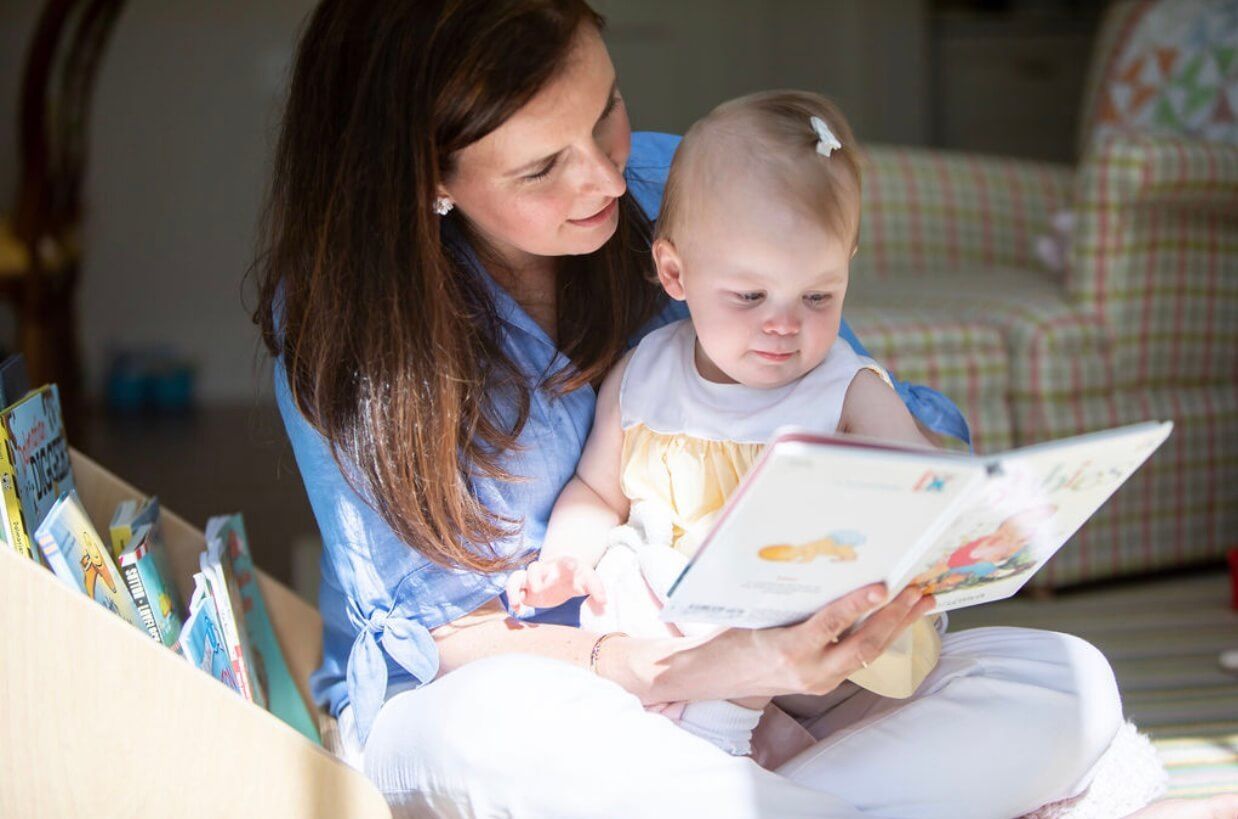
These years in the pandemic have been challenging for us all! As communities have gone in and out of restrictions, and families have endured periods of isolation and quarantine after positive Covid tests, children’s ability to play independently has become even more crucial for the functioning of a household. While independence continues to be an important developmental goal, the pandemic has highlighted how essential it also is for the practicalities of daily life.
Dr. Maria Montessori’s educational method supports this endeavor. Children learn to operate independently in the classroom, thinking for themselves, planning their day, and caring for their bodies and the environment. Her philosophy applies to home life, and serves children in this setting too. No matter what age your child is—from infancy through the teen years—there are simple approaches you can take to encourage their journey towards independence.
Infancy (birth to seven months)
Of course, babies depend heavily on their caregivers! A hungry baby must be fed, dirty diapers must be changed, and tears must be soothed. But there are small steps you can take to support your infant to become more and more their own actor in the world.
While babies go through phases where they need more time in their parents’ arms, they usually do not need to be carried all the time. Watch for moments when your infant is awake and alert, and set them down on a play mat or soft blanket. Place a few developmentally appropriate toys around them, or hang a mobile above them. Sit near them, doing your work, and offer a few reassuring words to let them know you are nearby. Then let them engage in their environment on their own terms. Don’t feel as though you need to jump up the second they begin to fuss. With a little observation and patience, you may find that they work through these feelings with their own efforts—finally reaching that toy, or soothing themselves as they find their fingers.
Gradually extend the time they are playing with their toys on their own, pushing them a little bit to encourage their independence, while also realizing that some days will be better than others, and that there will be times when they need more engagement from you! Giving them time and a little space will nudge them along this path, setting the foundation for more and more time in their own playtime.
Crawling Babies and Toddlers (eight months to three years old)
Children this age are busy and active and require constant supervision for their own safety! But, given the right environment and activities, they can spend time occupying themselves without depending on you for entertainment. In these situations, your presence is necessary to keep them safe but isn’t necessary for their amusement.
Once your little one is moving, take a look at your house and do what you can to make the rooms they play in as safe as possible for their own exploration. This means removing furniture they are likely to climb on, relocating small and breakable items, covering up outlet plugs, and adding gates to areas where it is not safe for them to go on their own. There is a balance here because you do not want your house to become so child-proofed that everything is inaccessible and there are no natural consequences, but you also want to be able to look away from an especially active child for a few minutes without endangering life or limb! This balance will be unique to every family and home.
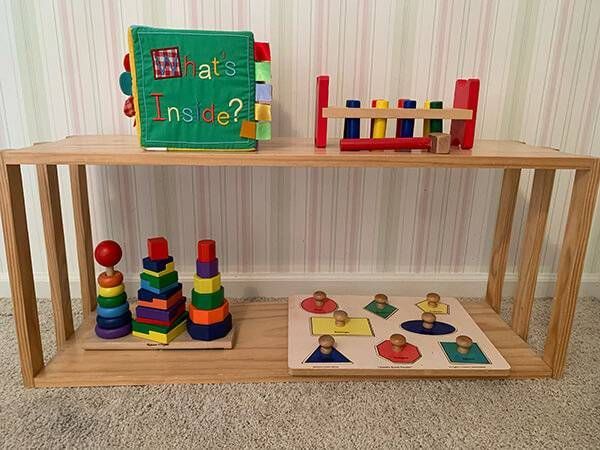
Within the spaces where you’d like them to play independently, set out a few toys—but not too many! Put most of the toys in storage and then rotate what you have out to play with. This prevents your child from becoming overwhelmed by choices and mess and also keeps them interested in what is available to them.
As with the infant, sit near them with your own work, and keep one eye on them for their safety, but allow them to play independently. It’s okay for them to become a little frustrated with their activity. Repeat gently to them that you are not available to play right now but that you will be in 10 minutes (or whatever the right time frame seems to be!). Meet your child where they are, and push them just a little bit towards more independence. They will gradually adjust to realizing that there are times when you are close but busy, and they can entertain themselves.
Young Childhood (three to six years old)
The young child has many of the same needs as the toddler—a safe environment, limited toys, and nudges towards independence—but by this age they have usually developed a bit more of a self-protective mechanism and aren’t as likely to injure themselves with too much freedom. Because of this, they can have a little more space to explore and a little more physical distance as you encourage them towards solitary activity. But, as always, be observant of your own child and your own home, and start with a situation that keeps them safe.
By this age, they also have a slightly more developed sense of time and will tend to respond more positively to: “I am busy right now. You can play and I’ll be available to be with you in 10 minutes.” They also may respond to challenges that give them a little structure but release you from constant engagement: “Can you collect all the balls from the living room in one basket?” Or “How many toy animals do we have in this room?” Their environment and choices can grow as their abilities grow. With practice and support, the young child is very capable of extended independent play!
Elementary Children (six to twelve years old)
Ah, the elementary child! Perhaps the golden years for independent play. During this stage, children tend to be sensible and competent. They enjoy playing on their own and are usually able to avoid trouble. They have wonderful imaginations and ideas for creative endeavors. Keeping appropriate items and activities within their reach will do much to satisfy their desire for activities—glue, construction paper, scissors, duct tape, wood, pipe cleaners. You will be amazed at what they can make!
For these trustworthy children, the most common obstacle to independent play is, “I’m bored!” It’s a common refrain in most households and can be tempting to solve with the parents’ own ideas or new toys or activities. However, when parents offer their children answers for their own boredom, they simply create a self-perpetuating cycle.
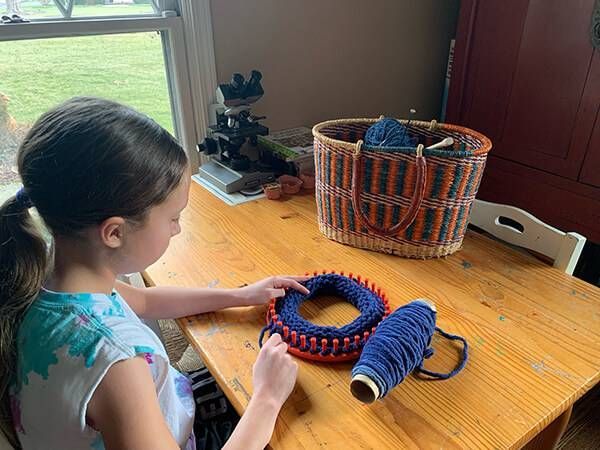
Instead, try this: When your perfectly capable and inventive elementary child tells you they are bored, tell them, “Oh, good! Boredom almost always comes before concentration and creativity. I can’t wait to hear what you do next.” Then return to your own activity. Their boredom is their problem. Not yours!
If the boredom epidemic in your house is particularly stubborn, you can also always resort to saying, “Ah, what luck. We have a kitchen that needs to be mopped, and I was hoping someone in the house was bored enough to do it.” Soon enough, they will learn that telling you about their boredom always results in chores.
Adolescence (twelve to fifteen years old)
After several years in the elementary stage, many parents can begin to think they are home free. Alas! This is not the case. Once your child is twelve, their development takes on what can look like a regression of sorts. Just like the early years, when parents need to keep an eye on their toddlers’ physical safety, now they are watching out for emotional and social safety—allowing them to make mistakes but protecting them from permanent damage.
While they are still incredibly capable, they may need well-timed, compassionate, side-by-side guidance, as their changing brain diminishes their executive functioning and foresight capacity. This is a time of immense (and often confusing) physical and emotional change. Adolescents benefit from an adult who will discreetly supervise their activities but still has genuine trust in their teenager’s ability to make good choices.
An adolescent may seek independence by withdrawing to their room or requesting to run loose with their friends. And while this is developmentally appropriate and beneficial to some degree, once again, the adults in their lives need to be mindful of checking in with them with some regularity. Their emotional and social lives become more complicated in these years. Just like during the infant years when they may stumble down the physical stairs, these young adults now rely on their parents to help them when they stumble down emotional stairs!
Independence at this stage means supporting your child in their own interests and activities and encouraging their self-reliance, but being careful not to abandon them to their emotional and social world. Your quiet presence and gentle check-ins keep them secure as they grow.
Final Thoughts
Children of all ages benefit from the same principles as you support their independent play at home: A safe environment, appropriate activities, encouragement, and check-ins. Along with these principles comes the flexibility necessary for any endeavor with human development. Children will differ from day to day for reasons both seen and unseen, and the adults in their world must keep their eyes on their goal, while also accommodating the reality of the moment.
Your children’s independence will serve your family, but it also serves them in their lives. Your family life will develop breathing room, as your children come to see themselves as individuals in the group—individuals who bring their own strengths and gifts to the whole. And your children will come to know themselves, recognizing their own capabilities and interests. They will grow in confidence and competence, preparing them for the world outside of your family.
For more information about the importance of independent play, see our post Self-Directed Playtime is not Wasted Time.