Humans have many special abilities that set us apart from all other species. Dr. Maria Montessori spoke of these abilities as gifts that have allowed us to thrive for hundreds of thousands of years. We can reflect on the past, we can imagine the future, we can care about people across the world whom we have never met, and we have created language, which allows us to share stories with people from different places and even different times.
These gifts have allowed us to thrive on this earth, building civilizations, creating inventions with capabilities beyond the wildest dreams of earlier generations, and saving ourselves as a species many times over.
However, with these incredible accomplishments also come incredible anxieties. More than just reflecting on our past, we also ruminate on it, poring over our actions as individuals and as groups. More than only making plans for the future, we also have deep fears for what tomorrow will bring, for ourselves and for our loved ones. Additionally, as we have felt generous urges to care for people we do not know, we have also felt crippling empathy for people in countries thousands and thousands of miles away from us—people for whom we can do very little except feel pain for their suffering.
Technology and language have made this possible. Our original communities were fewer than 200 people, and our love for humanity in general was abstract. Now, the internet, social media, and constant news cycles have expanded our communities almost infinitely. We can hear stories of great anguish about people who live literally as far away from us as geographically possible. We can be incited to fear about dangerous situations across oceans. Technological progress has made these threats feel as though they are closer than ever.
While there are many positive aspects to these incredible advancements, they also make the physical, mental, and spiritual work of living our lives and raising children much harder. We can feel paralyzed by fear and despair.
But fear and despair will not save humanity. Fear and despair will not improve this place in which we were blessed to be born. Fear and despair will not allow us to be productive, deepen friendships, or raise children who will inherit our flawed and beautiful world.
So what are we to do?
When hard times are upon us, we cannot succumb to anxiety and hopelessness in perpetuity. We must cultivate optimism in the face of our challenges. Many people understand optimism as look for the silver lining, or the glass is half full, adopting a Pollyanna-ish attitude towards tribulations and otherwise sticking their heads in the sand. This is not true optimism.
True optimism comes from courage. It comes from believing that there will be goodness in whatever chapter comes next. And it comes from knowing that we, as individuals and as a global population, have the strength and potential to handle an uncertain future. In fact, that is all we have ever done.
As humans, we have incredible physical and spiritual tools at our disposal. But we must decide how we use these tools. It is not enough to simply react or to act out of habit. We must harness our technological and human abilities.
The Montessori approach offers a way of understanding the world and understanding children so that we can give themselves and ourselves the perspective necessary to thrive in an ever-changing universe. We must act with intention, and engage with our thoughts in such a way that encourages and strengthens optimism—fortifying ourselves for challenging times, allowing us to live lives of purpose and meaning, and giving our children these same gifts.
The Emotional Climate of Our Homes
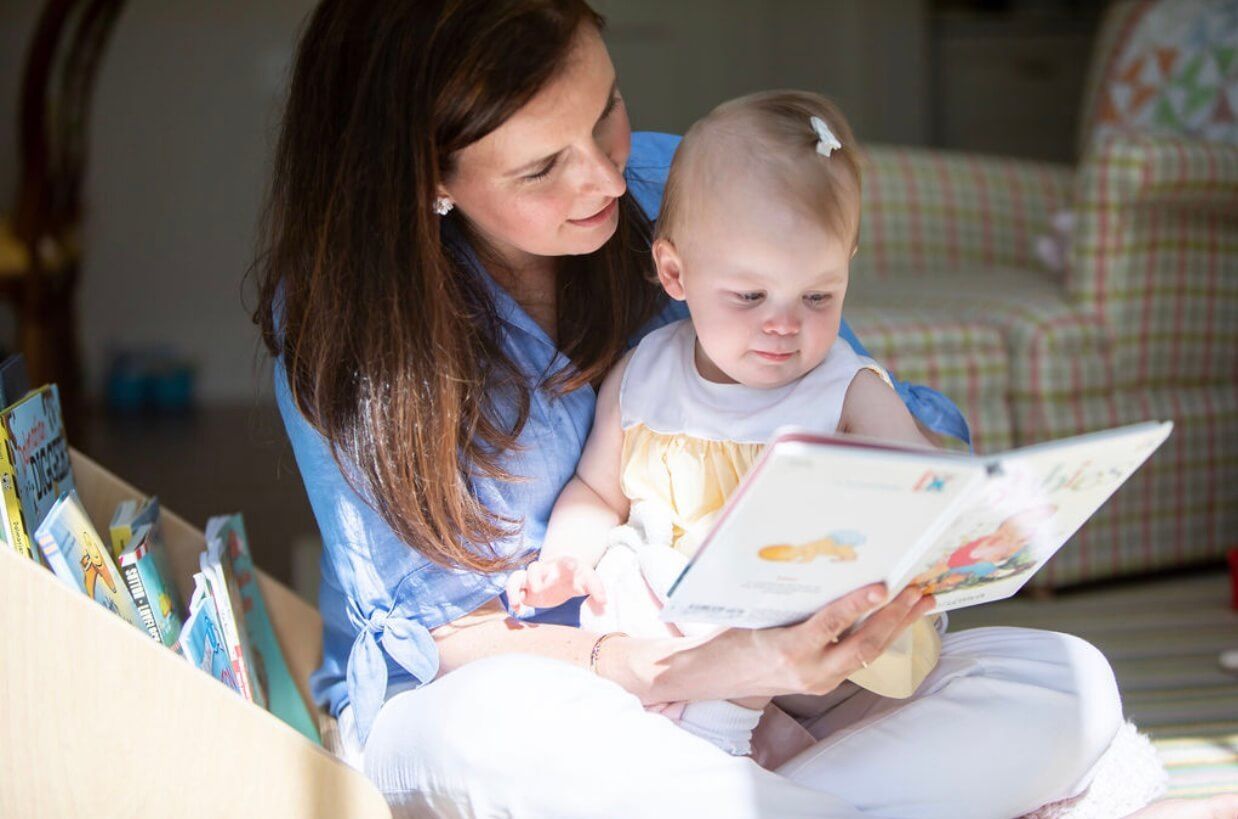
Dr. Maria Montessori recognized that, as parents and caregivers, we are the most important part of our children’s environments. Our emotional state colors the air our children breathe. This may feel like astounding pressure, but it is also important to note that we do not need to be perfect.
We do not need to be perfect.
We can feel emotions—all kinds of emotions. In fact, we should feel all emotions. We want our children to recognize that healthy adults experience the fullness of human life, which includes joy, sorrow, delight, anguish, and more. But our responsibility is to ensure that no emotion becomes our singular state, and that we are able to allow these feelings to pass through us, accepting them, and then recovering to a place of stability again. This is part of the nature of optimism—knowing that no state is permanent, and that we will be able to handle what we are living through now.
This means that tending to our mental health is of the utmost importance while raising children, however that may look for any individual (See Forest Bluff School Blog, Preparation of the Parent: The Work of the Heart for further discussion).
A part of our home’s emotional climate directly relates to the information that comes in. Because of the internet, we have access to the news in real time, and can have headlines plastered across our phone as they are being written. It is impossible not to react to unfolding stories that involve fear, sadness, and pain. This is human nature and related directly to our ability to reflect, imagine, and care for others.
The issue is that these news stories can affect our ability to function in a healthy way and to maintain emotional stability for our children. It is hard to stay optimistic about life when we hear about the worst things happening every day. While there is a purpose to staying informed, keep in mind that reading about an event that is happening across the world as it is being written may not actually be the best way to stay accurately informed. These stories are often written with two or three degrees separation; facts are corrected after hours, days, and weeks; and only the passage of time can truly indicate an event’s significance. We may find ourselves on an emotional roller coaster as headlines are unrolled throughout the day, only to find out that the event did not unfold exactly how the articles first indicated, nor did it have the impact that the particular journalist or writer first claimed it would.
Additionally, while terrible things happen, we have to keep in mind that the news tends to only focus on the most dramatic events. The truth is that there are also wonderful things happening every day, but we do not hear about those things. Our internal optimism is bombarded by negative news without also being bolstered by the many stories of courage, creativity, and generosity that we know are also inherent to humanity.
None of this is meant to say that adults should not continue to consume the news. The question is to first realistically assess how the current consumption of news is affecting us. Questions to ask are: Do you feel paralyzed, anxious, or angry after reading or watching news or stories on social media? Do you carry that emotion into the rest of your day?
Instead of thinking of it as all or nothing, consider reducing consumption by one degree. If your phone is set to share alerts as news breaks, you can turn that feature off, so that you are only exposed to news when you go looking for it. If you find yourself checking the news or social media every hour, cut back to twice a day. If you check twice a day, cut back to once—perhaps not first thing in the morning (when it sets the tone for the day) or in the evening (when your brain is shutting down and has fewer defenses, and will set the tone for your sleep).
We can be informed citizens while not participating in a 24 hour news cycle with a barrage of stories from multiple media sources. We can put up boundaries so that the news comes in with a filter of time as a perspective maker and so that we can hear the information without being bombarded by our own paralyzing emotions.
All of this is shared against the backdrop of also considering what news our children are exposed to. This, too, makes up their emotional climate. Dr. Montessori observed that children’s capabilities changed when they turned six, when they turned 12, when they turned 18, and when they turned 24 and entered true adulthood. The youngest children are very concrete thinkers and have no real way of understanding when something is thousands of miles away and when something is in their backyard. Even as they grow older, they still have developing brains, unable to fully comprehend frightening stories within the context of history and geography. While they can hear more as they enter their teen years, they still need adults to protect them from too much information that makes them feel helpless. Their youthful optimism requires time and space to bloom into an authentic ability to take purposeful action. Our children need to learn to love the world before they can save it. We can show them how to do this by letting them be children while they are still young.
The Arc of History
An important perspective to take for ourselves and for our children is a deep understanding of what our earth has been through and what humanity has survived before. There is a long arc of history that has preceded us as humans and where we stand today. We created shelters and clothing to protect ourselves from the elements. We devised tools for gathering food. We created civilizations through sheer ingenuity and a willingness to cooperate. We harnessed electricity and water. We built vehicles for transportation. We invented medicine to treat thousands of illnesses. We have lived through wars, famine, and deadly viruses.
None of this is meant to belittle the real challenges that face us today. But they serve as a reminder that humanity has shown us again and again that we are resilient and we are resourceful. This is optimism. This is an abiding understanding that humanity can prevail. The world is uncertain now, and it has always been uncertain. The world is changing now, and every part of it has always been changing. Even the great oak trees, which seem unchanging are transforming on a cellular level with every second that passes.
The Montessori history curriculum reflects this perspective. Children learn about the history of our universe, all living things, humans, civilizations, and historical periods through timelines that show our place in time against the backdrop of all that has come before. They see that our universe has existed for 10s of billions of years, and life forms have existed for billions of years. They see that humans first arrived on earth 300,000 years ago, and that civilization is 4,000 years old. The timelines show them major events and changes that took each historical arc from the beginning to where it is now. All of these stories are told with awe and gratitude for what has come before, and with an implied sense that more will come after us.
With this backdrop, children learn that their story is important, but it is also just one story set against billions of years of history. They cultivate a feeling of wonder and inspiration from the accomplishments of the people who came before them. They understand that they too are human and have these same capabilities. They feel optimism about who they are and who they will be. With this understanding of themselves, how can they not also feel that they will be able to handle the trials that the world brings them when they reach adulthood?
The future is not something they need to fear. It is something that they are born to live through and work through, just as the billions of people who came before them did.
What You Can Do
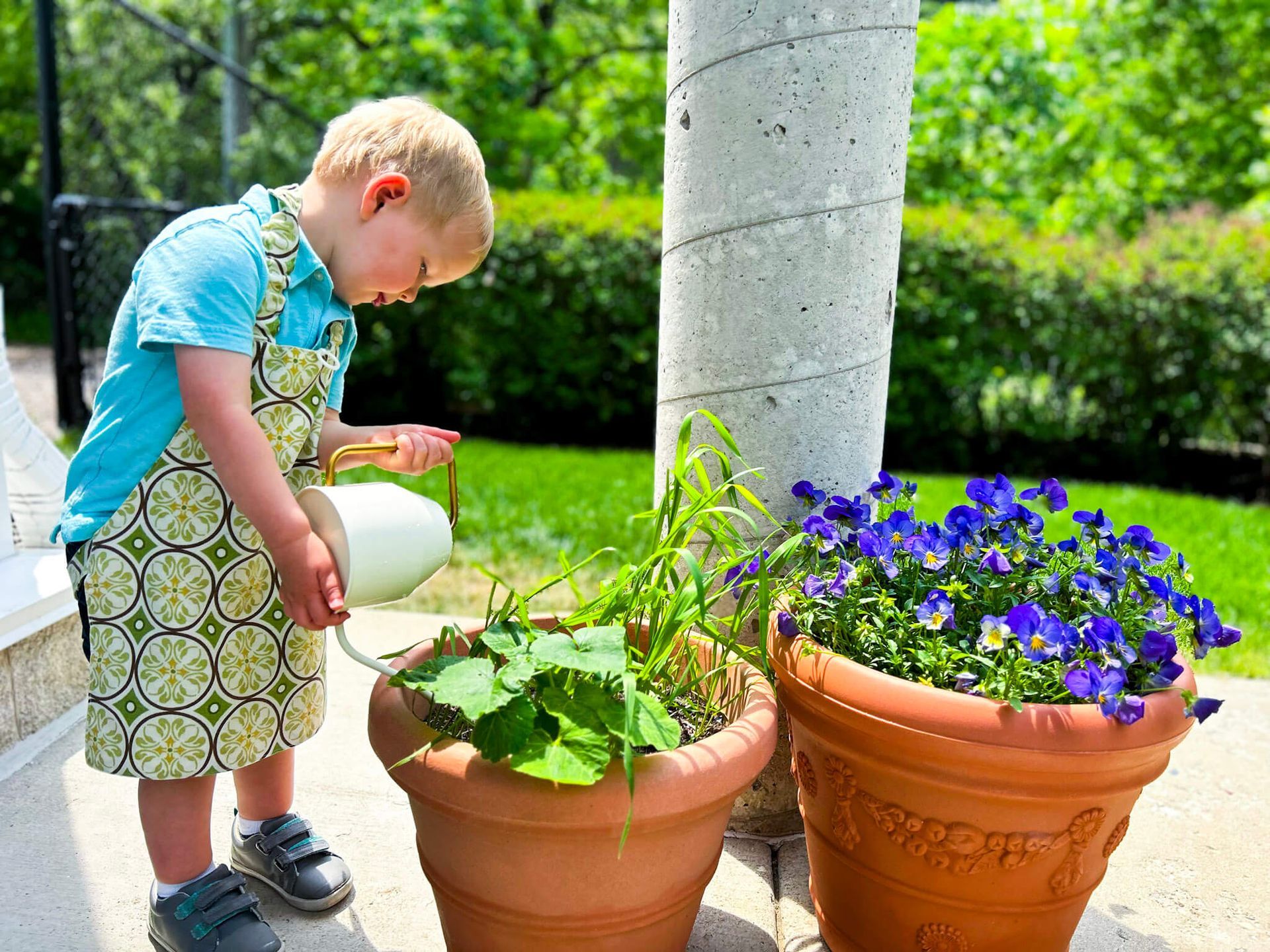
One of the most enduring qualities of a Montessori education is the sense of one’s own competence and agency. This trait develops from the age of the tiniest children—infants who are encouraged to reach for their own toys on the floor, toddlers who put on their own coats and prepare strawberries for their classmates, young children who clean up after themselves and make choices about what work they will choose, and on and on. In Montessori, the concept of independence isn’t an afterthought. It isn’t an isolated subject in the curriculum. It isn’t contrived or managed. It is inherent in the fabric of the approach. It lives in every part of a Montessori child’s life.
When someone feels competent, when they feel autonomous and believe they can have a positive impact on whatever is around them, they can’t help but feel empowered about their prospects. They may worry and feel fear. They may feel momentarily overwhelmed by hard times. But their internal optimism will inevitably take over. From the time that they were very small, they have learned again and again that there is always something useful they can do. This feeling comes from the inside, because in Montessori, they are doing work and making contributions that are truly useful to themselves and to their peers. This understanding of themselves will never go away.
As adults, we can model and encourage this feeling in our own lives. Depending on the scope of our energy, time, and concerns, we can always find ways to empower our children to contribute to the world around them. There are many age appropriate ways to do this. It may look like a fundraising bake sale for refugees in another continent. It may look like visiting a local food bank to support people in your community. It may look like baking cookies for a neighbor, or even simply folding clothes with their parents to help in their own home. (See our blog Love in Action: Community Service With Your Children for more ideas). Even if they cannot solve the world’s greatest problems, showing them that they can solve some problems plants the seed for tomorrow.
The only way despair wins is if we do nothing. If we do nothing, then we tell ourselves, You’re right. There is no point in doing anything. Despair can be a temporary state. Show your children with your actions that optimism has a place in their lives. Their agency is real and matters. They can have an effect, however small, on the lives of people they know and people they don’t know. It all matters.
Final Thoughts
It is not easy to be human. It is not easy to be alive and to love people in a constantly changing world. There is uncertainty, there is fear, and there is suffering. But emotion itself exists upon one spectrum. The greater our capacity for sadness, the greater our capacity for joy. The more we can hold emotions of a negative valence, the more we can hold emotions of a positive valence. Many great thinkers have proposed that it is wholeness and not happiness that should be our life’s pursuit. Taking this to be true, we can move forward with courage to face the challenges that come our way, knowing that they will bring us meaning.
It is a privilege to be on this earth. We get to enjoy the budding spring every year, the sounds of the lake against the sand, a star-flooded sky far away from a city, the quiet crunch of footsteps after a new snowfall. With this beauty comes uncertainty and loss. That is the nature of the world. But this nature does not mean that we need to succumb to a permanent feeling of helplessness or anxiety.
We have so many incredible intangible tools at our disposal. If we can harness these tools with intention and thoughtfulness, we can live lives of optimism and purpose. Dr. Montessori said, “The child is both a hope and a promise for mankind.” With this perspective, we can nurture our children, recognizing that hope and promise, and allowing them to instill in themselves the feeling that they can and will live lives that better mankind.