Montessori’s Steady March to “Somewhere”
Paula Lillard Preschlack • January 5, 2016

Vicki Abeles, author of the 2010 documentary, The Race to Nowhere, raises grave concerns about how children are being affected by increased pressures from their schools and their parents to perform at the highest level: Schools pile on the testing and homework; parents pile on after-school sports, lessons, tutoring, and expectations. The results are alarming: anxiety-ridden, unproductive young people who are unprepared to cope with life’s most basic challenges.


The examples Abeles describes in the article “We’re destroying our kids- for Nothing: Too much homework, too many tests, too much needless pressure,” published by Salon on October 31st, 2015, and again this past Sunday in “Is School Making Our Children Ill?” from The New York Times, ring the familiar bells of what has become a mainstream family lifestyle. Even though we rarely come across the described stress and over-scheduling in our community at Forest Bluff School, these messages are important reminders for us to recommit to the main principles of Montessori to raise thoughtful, happy, healthy, productive people. As adults, we can best aid our children on this quest by doing 3 things in our homes:


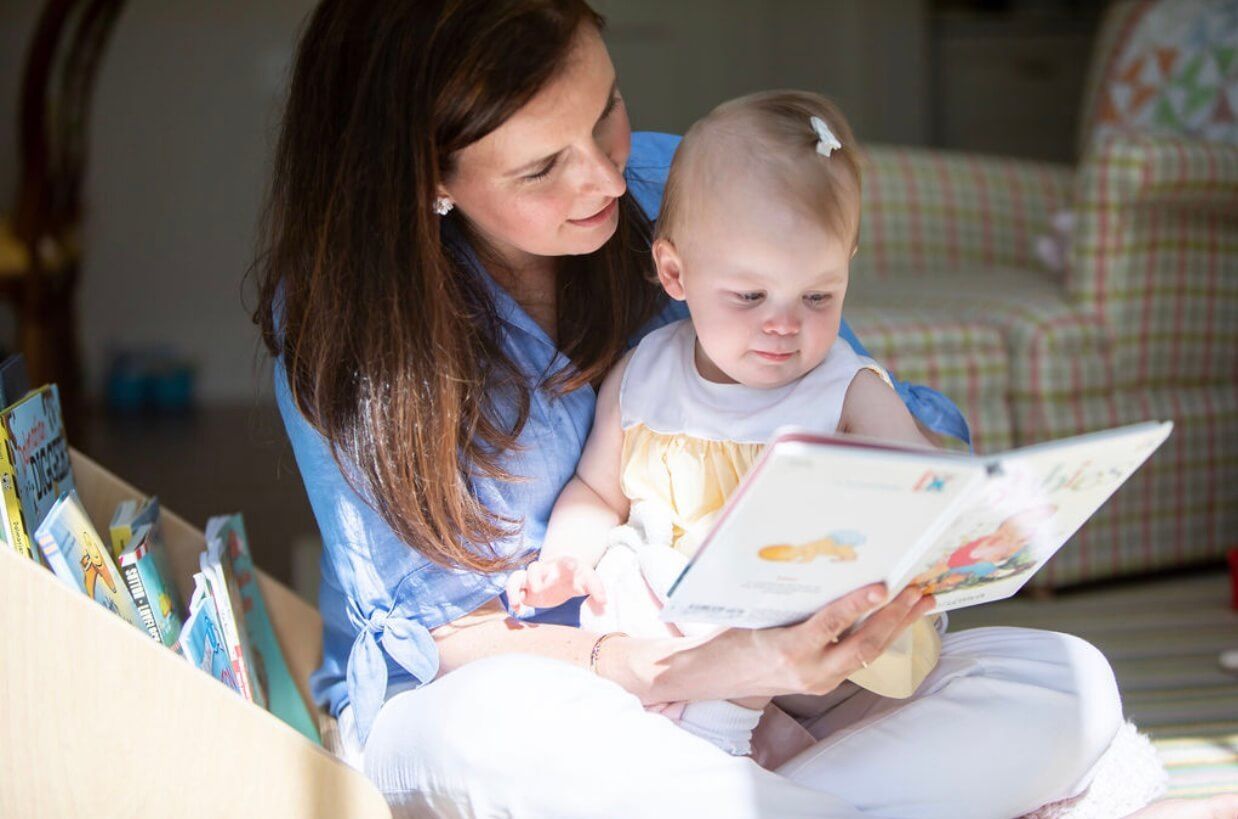
Prepare the environment: which means providing a routine that gives a child a chance to rebalance herself after the school-day; some time for reflection and reading, creativity/(free time to play), outdoor exercise, and time to make a contribution to the family by helping with dinner or caring for the home. Basically, this means to give the gift of time to be a child and to be a contributing member of a family community. Having a home that is simple, has many books available, a few art supplies and natural outdoor spaces is most likely to inspire reflection, creativity, and activity. It is through reflection, creativity and their own actions that our children form themselves as unique people.


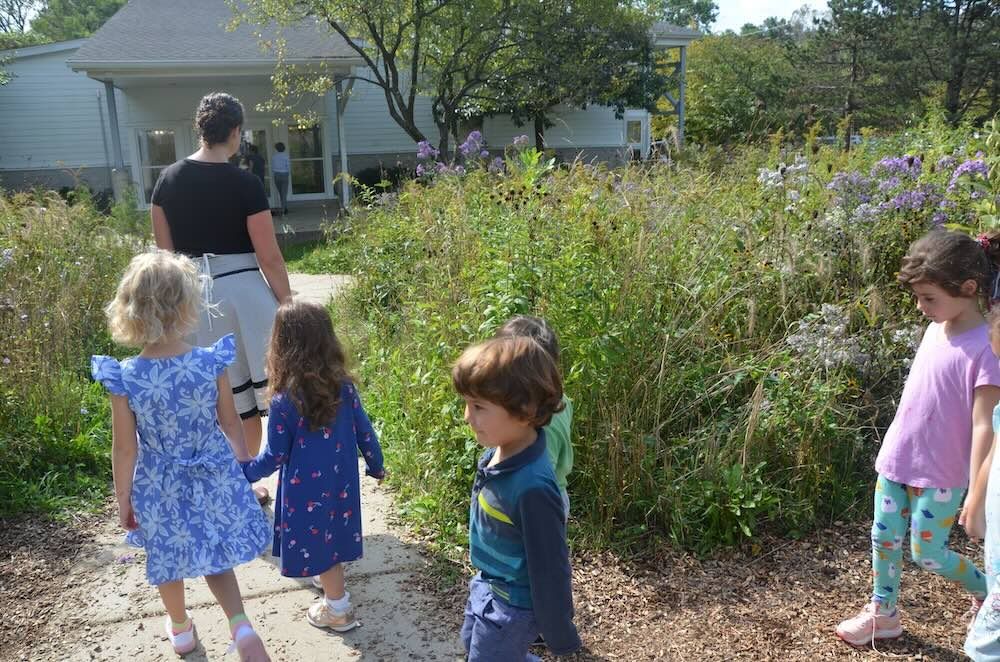
Model healthy behavior: which means to slow ourselves down and take care of ourselves as adults to give back to the world with energy the next day. Reading, taking a walk outside, and spending time in thoughtful conversation are the kinds of healthy behaviors our children need to see from their parents. This teaches them how to care for themselves and re-energize in the same ways.


Provide some freedoms that require responsibility: which means allowing our children to take part in making decisions about their contributions, giving them some freedoms to make certain choices and honoring their personal tastes, with the balance of expecting our children to handle this respectfully and responsibly. This will help them to be gradually prepared for the freedoms and expectations of their future adulthoods.

Raising our children to be prepared for the challenges of life comes down to basing decisions on these three guidelines. This is precisely why the only “homework” assigned to Forest Bluff children and their parents is to read together, prepare family meals, and care for the home environment together. Families follow these suggestions and their children come to Forest Bluff School rested, energized, ready to learn, work hard, make choices, solve problems, think creatively, and give to others. By raising your children this way, and choosing a school that supports this model, you are proving that it is possible to resist surrounding cultural pressures to follow the “race to nowhere.”


Links to related articles:


Is the Drive for Success Making Our Children Sick?


We’re destroying our kids — for nothing: Too much homework, too many tests, too much needless pressure


Printable PDF of this post
A young child outside on a sunny day using a watering can to water potted herbs and flowers
By Margaret J. Kelley April 20, 2026
Forest Bluff School in Lake Bluff, IL, explores how the Montessori philosophy helps families trade "crippling empathy" and anxiety for a productive, grounded optimism.
A teacher and Montessori student at Forest Bluff School in Lake Bluff, IL, shake hands.
By Alice Davidson with contributions by Margaret J. Kelley February 25, 2026
In Montessori education, we view each child as inherently capable of developing a strong sense of right and wrong. A child’s moral compass is not something we impose upon them—it is something that grows within, guided by experiences, reflection, and consistent modeling from the adults in their lives. For that moral sense to take root, children must be allowed to experience accountability for their actions. When parents shield their children from consequences or defend behavior they know is wrong, they unintentionally undermine that process, creating confusion and instability in the child’s understanding of truth, fairness, and responsibility. Many parents defend their children out of love and protectiveness. They wish to spare their child from discomfort, embarrassment, or the feeling of failure. Yet this kind of protection, though well-intentioned, teaches the opposite of what true love demands. One of the tenets of Montessori is to put children in contact with the real world in age-appropriate ways, trusting that they have the inner capabilities to grow and adapt when they have real experiences. When parents constantly justify, minimize, or excuse poor behavior, a child misses an opportunity for feedback; they learn that honesty is flexible and that integrity can be negotiated. This erodes their moral foundation and leaves them uncertain about what is right—not because they cannot feel it, but because the adults they trust most are contradicting that inner voice. In Montessori, children learn to do work and make decisions based on intrinsic, not extrinsic motivation. We trust that they have goodness inside of them, and while they absolutely need guardrails and guidelines, we can best serve them by teaching them to distinguish between their internal drives, and to take action in accordance with their conscience. Children are perceptive. They often know when they have done something wrong—whether they spoke unkindly, acted selfishly, or disrespected another. When their parents immediately defend them or blame others, the child experiences an internal conflict. On one hand, their conscience tells them they made a mistake; on the other, the parent’s response tells them they are in the right. Over time, this mismatch between inner truth and external validation creates confusion. The child begins to question their own moral instincts and may even learn to ignore the pangs of conscience altogether, relying instead on external approval to define what is acceptable. This is one of the greatest harms of over-defending a child: it separates them from their natural moral compass. When children are consistently told they are right—even when they know they are not—they start to equate love with being defended rather than being guided. They may learn that relationships are maintained through justification and blame-shifting instead of honesty and repair. Later in life, these patterns can manifest as difficulty accepting feedback, resistance to authority, or an inability to take responsibility in personal and professional relationships. In Montessori classrooms, we see accountability as a cornerstone of growth. When a child makes a mistake—perhaps they take another’s materials without asking or speak rudely to a classmate—we respond not with shame, but with calm guidance. We help the child reflect: What happened? How did this affect others? What can you do to make it right? This process nurtures empathy and clarity. It helps children see that they can correct their mistakes, that doing wrong does not make them bad, and that making amends restores both harmony and self-respect. Accepting that your child can be wrong is not a sign of parental failure—it is a sign of courage and wisdom. When you model accountability yourself, your child learns that truth is not something to be feared. They see that mistakes are part of being human, and that integrity means facing them with grace. Ultimately, allowing your child to experience and accept the consequences of their behavior builds confidence, empathy, and moral clarity. Shielding them from accountability may protect their feelings in the short term, but it confuses their conscience and weakens their inner sense of right and wrong. By guiding them lovingly toward truth and responsibility, you empower them to grow into kind, honest, and self-aware individuals—qualities that form the true foundation of a moral life.