Independence in the First Plane of Development
In this article we are going to talk about the child’s plea for help in achieving independence in the First Plane, the years from birth to six. This of course means physical independence: independence in the here and now, the present world of time and space, in the world that we see and touch. As always in Montessori we want to keep in mind where the child is going next so that we are helping the child build a strong foundation for the succeeding plane. In this case: childhood’s “age of reason” and the Second Plane, the years of 6 through 12. The child now asks of us “help me to think my own thoughts.”
Recognizing this succeeding need helps us to understand that the child’s ultimate goal in independence is actually a spiritual one. It is the human spirit within the child that asks of us “help me to help myself” from birth to six and “help me to think my own thoughts” from six to twelve.” This ultimate need of the child reminds us that we want always to see the child before us, to look deeply into his or her eyes, human spirit to human spirit, “subject to subject,” recognizing and respecting that this is a unique human being never created before and never to be created again in all of human history – past, present or future. This incredible mystery, and the awe it calls forth, is the basis of our loving interactions with our child. It is in these moments of awe that we find the answers for how to help our children to eventual independence from us, both in the physical world and in the abstract world of ideas, reason and imagination. These answers are far more likely to be based in our own intuitive observations of our children than in the many “how to” books of our current day, helpful as some of them may be.
I was fortunate to have just such an opportunity for intuitive observation of children in the early 1960’s. It was this experience that led to my initial attraction to Montessori’s ideas of education and an understanding of the importance of independence in early childhood. I was a young mother of four children under the age of six– and in my twenties in the late 1950’s – when suddenly I found myself totally overwhelmed by the very life I had dreamed of having since childhood. How could this have happened? I was in complete shock. I knew how hard my parents had tried to be the best of parents, and I had done everything that was asked of me from good grades in school to social expectations. What could have gone wrong? Hence, began a long journey of self-reflection and understanding.
The opportunity to see Montessori’s approach to independence for children in action was a key part of that learning process. I was able to witness for a full school year the opening of a Montessori classroom for three to five year olds taught by an experienced teacher who happened to be in France just before the outbreak of World War II and had attended lectures there by Dr. Montessori herself. Miraculously, I saw these little children choosing their own work, putting it back, calmly and peacefully going about their uninterrupted morning with minimal adult direction.
Subsequently, I learned that visitors from all over the world had come to Rome from 1907 to 1913 to see Dr. Montessori’s original classes of young children, first with children of poor and illiterate parents but almost immediately with children from wealthy homes as well. These visitors reported their astonishment as they watched these children quietly choosing their own work, being kind and helpful to each other, and above all, calm and at peace whether: gardening, preparing hot lunch, serving each other with tureens of soup, and even learning to combine sounds and letters, numbers and one to one counting, thus becoming literate and numerate all by age six or seven.
Even more amazing, in these early classes in Rome--as in the classes I eventually observed in Cincinnati, Ohio in the early 1960’s--the children’s willingness to struggle, their self-motivation and energy when dealing with mistakes and accidents, their matter of fact attitude about them, their lack of dismay or discouragement, universally impressed those who came to see them. By 1913 Montessori had published her first book on what came to be called the Montessori Method and established her first International Training Course in Rome with participants coming from over thirty countries.
Visitors to our classes at Forest Bluff School today see the same phenomena as in those early days and ask the same universal question of those first visitors: “But how do the children know what to do?” We have come full circle to the young child’s plea, “Help me to help myself ” and the older child’s plea “Help me to think for myself.” The goal of our Parent Child and Continuing Education Series for parents is, in part, to help our parents at home to meet these needs of their children for eventual independent action and independent thought in their lives as adults.
Supporting Independence at Home
How then can parents help their children under the age of three to build the foundation for eventual independence? A parent’s first response is often to try and recreate the Young Children’s Community (for 18 month to 3 year olds) in the home. However, any parent attempting to do so soon finds that this task is neither possible nor necessary. Instead, we ask parents to bring their child to Forest Bluff at 18 months where we have created an environment that is meeting just the needs of these little ones. We do indeed suggest some ways for supporting your child’s independence at home. It is key, however, that you not interpret such suggestions as instructions. As parents, we tend to hear them in this way because we are conscientious about our children and also because of our own educational backgrounds where teachers consistently told us what to do, and when.
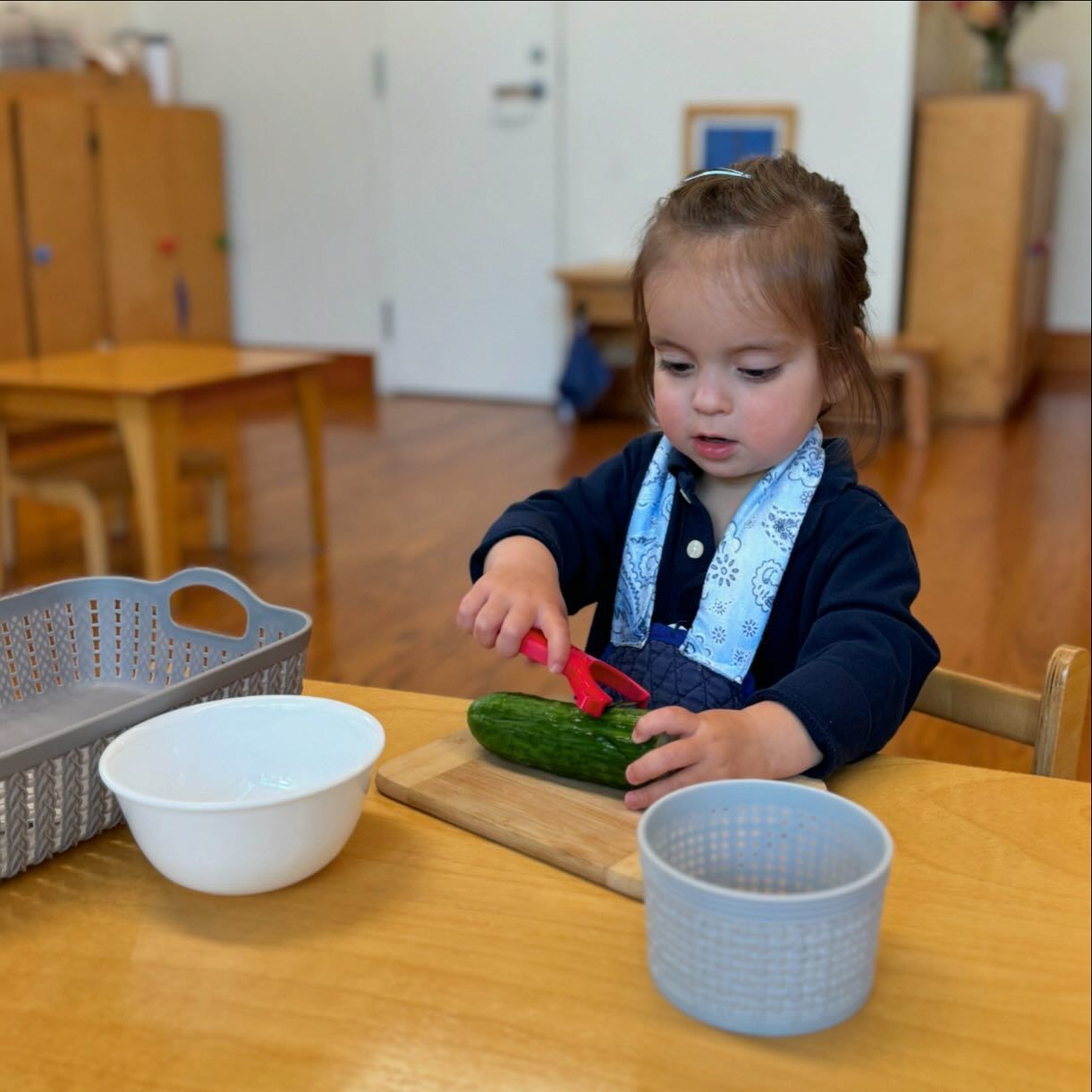
Perhaps – with our first children especially – we will have the opportunity in their early years to let them scrub a potato for dinner and put their own clothes in a hamper, but real independence is not going to come primarily from specific activities. It is going to come from a place that you may not have considered before. It is going to come from your child’s experience of you: of your relationship together. We have to begin with who we are, our spiritual selves. The child before us is a spiritual being; we have to address and relate to him or her with the human spirit within us.
Motherhood with its forced slow down in activities during pregnancy, nursing and the body’s recovery period, presents the perfect opportunity to reflect on our inner selves and our journey through life to date, our hopes and dreams for the future, our values and those achievements in life that will have the most meaning for us when our life’s journey is complete. Such gains in our inner lives are hard work but they will be with us for the lifetime of our parenting and reap benefits for all whom we touch in every area of our lives.
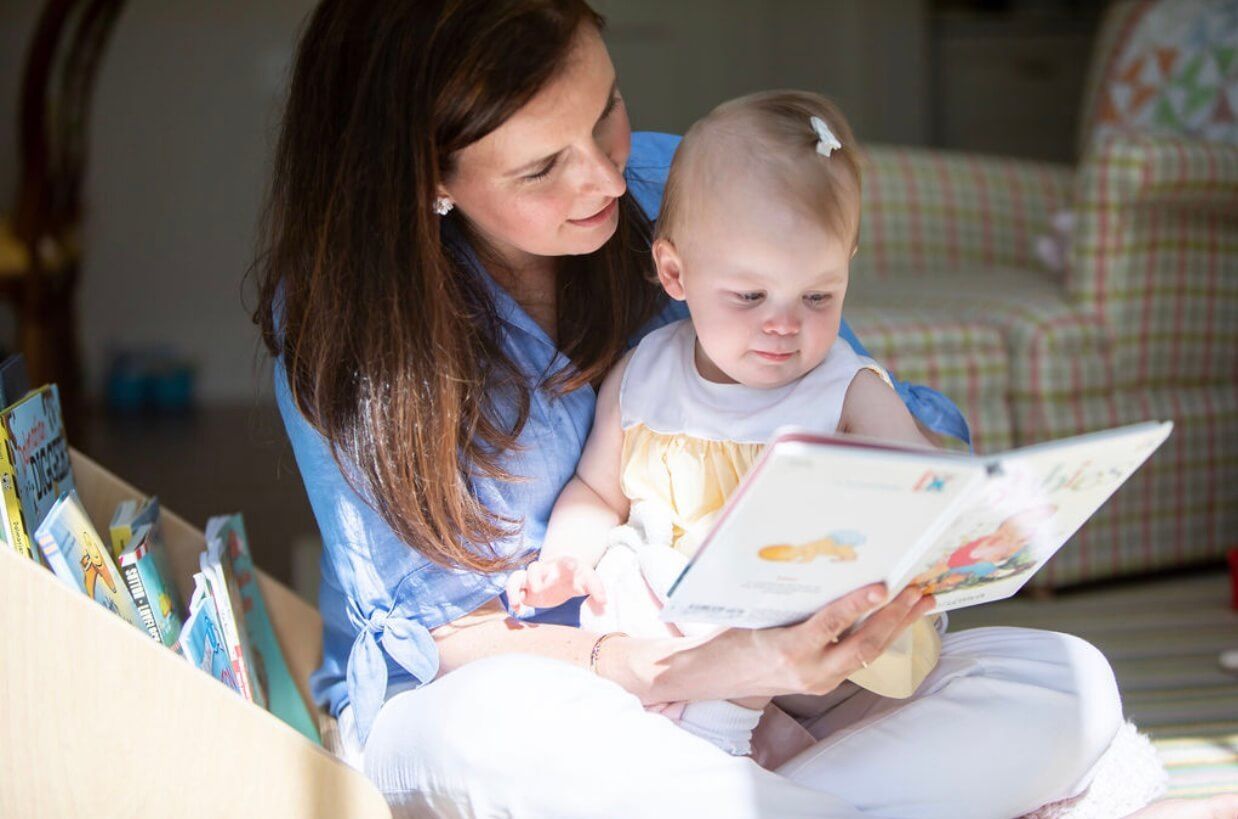
Relating to our children with our whole selves requires time: time to just be with them (no phone in sight or earshot) for a slow paced walk, sitting in the leaves, looking at clouds, reading a book, being a calm presence and enjoying life with them: above all, taking the time to just observe our children, not in a passive way but in an active one. If we make an effort to observe and think through each situation in family life and what might make this time of day go more smoothly, we will be rewarded with a more joyful and peaceful day, both for ourselves and our children.
Perhaps dinner could be prepared after lunch, before a quiet time with all the family in their rooms for a rest. Next, everyone could go outside to play and be refreshed just by being in nature, the human being’s original and most natural environment. Even on the coldest days, children and mothers can bundle up and get out in the fresh air, even if only for a short time. In the fall when the time change brings darkness an hour earlier, it might make sense to come in from outdoors and start the children’s baths at 4:00 or 4:30. Children would then be in their pajamas before dinner at 5:00 or 5:30. They could be in their beds for their individual story time with you just afterwards, thereby eliminating any opportunity to get overstimulated and overtired before going to sleep.
As you consider ways of arranging your daily schedule to meet the needs of your children in this modern world, I want to mention a major obstacle for all of us. It has to do with being fully present for each other – especially our children. We know that screens, cell phones, computers and much modern technology distract us from face to face contact with each other. We may not be aware, however, that new studies are suggesting that these technological devices can even make it difficult to be comfortable and relaxed after we are no longer using them. Thus they interfere with our enjoyment and opportunity for reflective thinking when we do set aside uninterrupted time for calm and solitude. (See: Reclaiming Conversation by Sherry Turkle, PhD).
Finally, we can deepen intimate and warm relationships with our children by planning an environment in our homes that fosters the intellectual lives of our children and of ourselves. Montessori teacher and author, John Snyder in his book, Tending the Light, describes the Montessori environment at home (as at school) as “free, peaceful, rich intellectually.” Montessori gave the details of this Prepared Environment at school for children from early childhood through age twelve. Therefore, Montessori schools throughout the globe are familiar to any child transferring from one to another. Obviously, she could not give details for our varied and unique home environments. However, the principles behind establishing a home environment that is “free, peaceful, rich intellectually” are similar.