Talking to Children About Sex: What to do about The Talk?
When I was in fourth grade, I asked my mother—just as she was biting into a Sunday night hamburger, as I remember—“Mom, what’s a ‘rubber?’” After a brief choke, she asked me why I asked. “Well, in this book a friend lent me at school, they keep talking about rolling on them. But…is it something you eat?” And thus began my mother’s version of “sex ed.”
I still cringe when I think about the embarrassing experiences in biology class when we covered that chapter in the textbook, the graphic movies we had to watch, and the discussions about what our feelings over the whole thing might be, which we thought were “creepy.” That science teacher with the big mustache will be forever etched in my mind.
What could be more personal than talking about sex? Every parent has a different approach to the topic, based on his or her own experiences, feelings, beliefs, and goals. And every single child is coming from a different place, with a unique personality, different questions, and varying readiness for the answers. Even more so than one’s development of a mathematical mind, language expression, or budding ability to recognize musical notes, talking about sex is not a one-size-fits-all topic.
Although Maria Montessori did not directly address talking to children about sex, it’s safe to say she would advise keeping with her approach on everything: meet each child where he or she is, respond with profound respect, include the spiritual aspects of life, and help children make sense of the biology and the appropriate social manners.
Many children, including adolescents, indicate that they are very uncomfortable having this topic discussed as a school subject. We believe the privacy of their own homes and the security of their families is the proper setting for a topic so deeply personal and important.
According to clinical psychologist Sharon Maxwell, it’s important that parents address these messages on some level. This could be through comments we make, conversations, and modeling. We also need to give our children information about their bodies and relationships with others.
About Those Birds and Bees…
Rather than talking to children about sex in one big talk, it’s more realistic—and wiser—to tackle this in numerous, small conversations over the years, asking questions and trying to determine how much your child wants to know before launching in. (Your child may simply want to know what a “rubber” is, for instance, and be totally unprepared and disinterested in hearing about everything involved in its use and misuse!) On another day, a child may be asking for just one other bit of information.
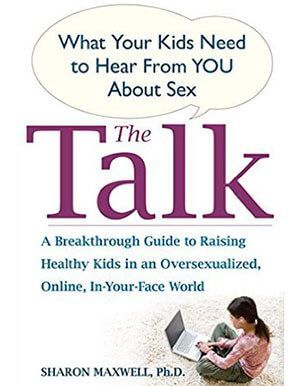
Only you can determine what, when, and how much your child is asking for. As you form your own attitude and approach, get input from resources. I discovered Sharon Maxwell’s excellent book, The Talk; What Your Kids Need to Hear From You About Sex, after hearing her keynote address earlier this month at the Wisconsin Montessori Association Conference. Seek out information from lectures by psychologists, your pediatrician, and friends and family members with children of their own. Follow your intuition and consider your child’s developmental stage as a guide for your conversations. Young children who ask about where babies come from, for instance, may literally just want to know about where they come from and not about graphic descriptions of sexual intimacy. A beautiful book that may meet this need is A Child is Born, by Lennart Nilsson.
When children approach puberty, getting a book that they can look at in private and ask questions about can be very helpful. Many families like the books by the American Girl Doll company, called, The Care and Keeping of You. For children ages twelve and older, The What’s Happening to My Body? Book for Boys (another is For Girls), by Lynda Madaras, goes into further details and addresses issues that our children may face in their high school years, as well.
With any book on this topic, choose carefully. Knowing that your child may pour over every detail, read the book you’ve chosen thoroughly before handing it over; some have a religious bent you may or may not agree with, for instance, while others cover way more information than you may feel is necessary, or not enough. Again, this is a personal topic, so choose what fits for you and your child.
…And What’s Beyond?
There’s another, deeper level to this topic that has to do with feelings, values, beliefs, emotions, desires, shame, ethical behavior, resisting temptation, and all the complexities that sexual relations will bring up as our children enter adulthood. To address the biological functions without the emotional component when talking to children about sex is leaving out the most important part and can lead to a fascination with physical sensations without the maturity to consider the emotional implications of sharing them.
Sexual relations compose our most intimate ways of connecting, and therefore the topic deserves compassionate, attentive, careful communication that is tailored to a child’s needs at that specific time in his or her development. I appreciate Sharon Maxwell’s guidance and attitude on talking with children about sex; she even advises that because sex is about respect, personal boundaries, and trust, be sure to tell your child that there are times and places where discussing sex is not appropriate and may make others feel uncomfortable because it crosses their own personal boundaries. Our children need to know that this is a topic we must be ethical and polite with.
Our children look to us for clues, so being relaxed, confident, and a little lighthearted can help you go beyond the birds and the bees and into sharing your thoughts about what it means to be human. Aim for the positive, rather than a list of warnings, don’ts, and threats. There are ways to cover all those unwanted results of getting in over one’s head without shame and remorse where it may get misconstrued. Think of this as an ongoing education you share with your children, not just one or a few big speeches. Touch on what makes this part of life unique and meaningful, and the rest will follow, one bit at a time.
Recommended Reading
- The Talk; What Your Kids Need to Hear From You About Sex by Sharon Maxwell
- A Child is Born by Lennart Nilsson
- The Care and Keeping of You by Valorie Schaefer
- The What’s Happening to My Body? Book for Boys by Lynda Madaras
- The What’s Happening to My Body? Book for Girls by Lynda Madaras