Take a moment to answer these questions for yourself:
What was your experience of reading growing up?
Are you happy with how much or little your children read at home these days?
Do you yourself get to read, ever? As much as you’d like?
Personally, reading is one of my favorite things to do. When I was a child, I was the youngest in a big family with older siblings who weren’t living at home by the time I was six years old. From then on, I was the only child at home with busy, working parents. We lived at the end of a very long driveway off a four-lane road and had no neighbors to speak of. It was me, the woods and fields, some animals, and books—a lot of them.
I would play by the hour, creating plot lines and characters with my toys. This imagination was fueled by the stories and illustrations in old classic children’s books that had been handed down to me, and by those my mother brought home for me from the library every Friday. My parents were avid readers, and my mother read all the classics to me before bed every evening. I vividly remember The Secret Garden, Black Beauty, Old Yeller, Little Women, and Treasure Island, to name just a few.
When my husband and I had our own children, we cherished the hours of reading to them every night in bed the way my mother had done for me. Those are some of our most special memories as a family, and this is one of my favorite topics to talk about with other parents. I am a passionate proponent of getting children to read at home.
Why is Reading Important for our Children?
In a world where jobs are increasingly taken over by machines, the qualities that will make our children employable will be those that make them the most “human.” There are things no machines can do as well as a human being, and I’m a firm believer that as a species, we will always crave human connection and keep coming back to it.
One of those human qualities is empathy. When we read a story from a book, we deepen our ability to empathize, to feel the feelings of another soul, to imagine what it must be like to be somebody else. When we hear the words someone else has put together in a unique order that could only belong to that very individual, we think, we imagine, we connect.
Another reason that reading is important is that it requires concentration. Children have to deliberately calm themselves down and focus their attention when reading. Repeatedly doing so fosters the muscles of concentration. Being able to concentrate well is necessary for learning new things, for reflecting, thinking, solving problems creatively, and creating something new.
Reading also nurtures communication skills, as children witness how others use words to form phrases, sentences, paragraphs, chapters, and entire books. So much organizing goes into building a story in words. Children soak this in naturally, by exposure. The more they do this, the better their own communication skills become.
Children also have to build the stamina for longer books where one has to keep track of storylines and characters. They have to really think about what is happening behind the scenes to comprehend and discuss texts in middle school, high school, and college. To do this well, children need practice. The only way to get that practice is by reading—a lot.
Another reason for reading is that students simply cannot “cram” for the language section on standardized tests before they take them for high school or college placements. The results of these tests, whether or not you value them, can determine students’ choices of educational institutions for all of their higher learning. The SSAT, ACT, and SAT have language questions that measure a student’s comprehension of sophisticated texts across subject areas, their understanding of the mechanics (grammar, punctuation, and sentence structure) of writing, and their grasp of rhetorical skills (style, strategy, and organization). The best way to prepare well for such tests is to read a healthy amount of good literature over many, many years.
Reading also enables our children to build libraries of knowledge in their heads. They educate themselves, in a sense, in ways that no classroom can supplement, on varieties of subjects as their interests evolve over the years.
Finally, reading helps children to build character, morals, and values. Children are faced with the question “Who do I want to be?” Harriet the Spy hurt a lot of feelings, and Little Lord Fauntleroy softened the heart of a grouchy, spiteful old man. Pollyanna was unfailingly cheerful until she herself befell a tragedy, and then eventually accepted the help from all those she had given so much to, when her companions young and old came to pull her up from the depths of her own despair. Children wonder, whether it be spoken or silent, “How would I deal with these situations? What are the options?”
How to Create a Culture of Reading
Now that you’re convinced that reading is important for your children, how can you get it going at home? Here are some suggestions:
Prepare the Space
Set the stage with nooks and inviting places to read.
Surround yourselves with books, and make them accessible to your children.
Remove obstacles, both psychological and physical (loud toys, video games).
Protect the Time
Make “down time” to relax, reflect, and read.
Whether the hour before bed every night or lazy Sunday afternoons, be sure to schedule in time when reading can occur naturally.
Model Reading
Bring a book with you everywhere you go. If you pull a book out of your purse when you have to wait in a line or sit in a waiting room, you will not only be modeling; you will feel calmer, more thoughtful, and be more present for your child and the people around you. This is when we often pull a smartphone/screen out. Try a book for a change. See what happens.
Go to the library regularly, and set reading goals for yourself if that helps you get going.
Read Aloud Daily
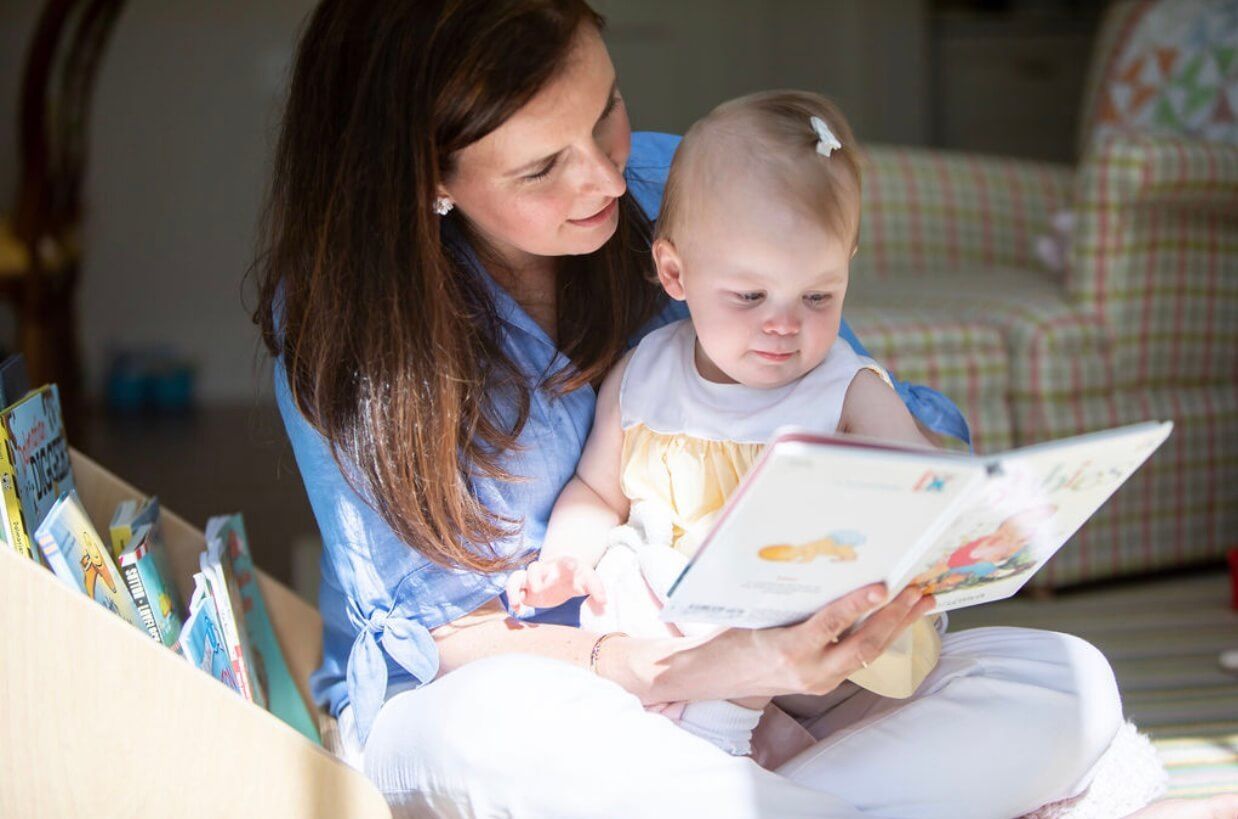
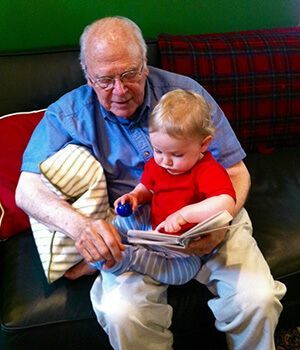
Read out loud to your children every single day! This is perhaps the most important thing we can do as parents to help our children build a lifetime habit of reading for enjoyment. One common time of day for this daily activity is right before bed. I recommend that even if the family is reading one book together, you also spend time alone with each child, reading aloud. This becomes a very special time when that child gets to connect with you and ask questions. Impromptu conversations, often very important ones, arise. This is one of the main reasons I love the classics so much: the topics that arise when reading them are the gut-level, value building, real stuff of life. You may end up talking about your feelings on lying, stealing, being mean, doing the right thing when it’s hard to do, and even death. During these special times, parents and children bond. We set up the chance to share thoughts and feelings and impart values.
What to read aloud? Anything that you enjoy. Read new award-winners, and look for books about other cultures, races, and religions. Biographies and nonfiction are wonderful, too. But don’t miss out on the classic children’s literature. The classics bring up universal human experiences. That’s what makes them classics. When choosing the right level, read books aloud that are just above your children’s own reading comfort levels to expose them to the cadence, sentence structure, vocabulary, and pronunciation that will flow easily from you, feeding their minds.
Some Considerations when Choosing Reading Content for Children
Youngest Children
Under age six, children need reality and books that help them connect to the real world. They also need support to become independent, integrate their bodies and their minds, and develop self-control and the ability to concentrate. Being read to helps them to develop their own clear language for communication.
Elementary-Aged Children
Children ages six to twelve need to use their imaginations, explore with their minds, and develop their power of reasoning and empathy for others by imagining how others feel. Provide book choices with compelling characters and descriptive worlds that allow children to become immersed in the literature. They need to be able to read and reflect, unrushed! They also benefit from time for creative play and socializing and unstructured time in nature to explore.
Oldest Children
Children ages twelve and older need to be welcomed into adult society, learn to solve their own problems, and have reflective time to ask, “Who am I?” They need to experience that they are needed by groups of people outside of their own families, in the community. We can give them opportunities for tremendous effort, a close-knit group that functions together towards common goals, some quiet time to reflect every day, and a role to play in the adult world. Books that touch upon some of these themes and encourage deep reflection on themselves and the world around them can help adolescents navigate these critical years.
For specific age-appropriate suggestions, see My Favorite Children's Books for read-alouds and Forest Bluff School's Book Lists.
Get to The Most Common Obstacle
If your children aren’t reading as much as you’d like, and you are doing the above things, then check to see whether there is an obstacle in the way. The most common obstacle these days might be in the form of screens. Technology today ishighly attractive to young minds who do not have the judgment that we adults have. Passive entertainment is a big draw. You may think that “educational” content or “how to” YouTube videos are worthwhile for your children. But ponder, “What else would my child be doing with that 30 minutes (or much longer, as is often the case)?” If they might be imagining something they cannot see, empathizing with someone else’s feelings, connecting through language, solving a problem, thinking original thoughts, reflecting on something they just learned, or calming their anxiousness, then they would be better off reading!
For our children, the effect of being entertained with screen time is deeper than it is for us—they are setting patterns for a lifetime. While research is giving us the hopeful news that our brains have plastic qualities all the way into old age, the message is clear: It's hard, hard work to change our brains later in life. Our children are in a precious stage of their lives, and childhood is when they lay down their patterns for life.
Recognize that obstacles of technological entertainment get harder to avoid as your children get into the Elementary ages and into high school. We really have to protect and defend the time and the space for reading. We have to make opportunities for reading a priority.
“Makeovers” at Home
Now and then your family may need a “makeover.” In my family, we changed the family room from a TV room into a library, surrounded by bookshelves on two sides, with a low shelf where we rotated puzzles, board games, cards, a globe, and limited art supplies. On the coffee table between the two couches we put a big Atlas and field guides of trees, wildflowers, and birds. We rotated the “coffee table” books on this table each week. This worked wonderfully because our children had lots of toys in other places around the house, but the library became our family room; the room inspired curiosity, reflection, discussion, and exploration. We were surrounded by books! This may spark some ideas for your own home.

One more word on technology for the future: Now that my own children are almost 16 and 18, they have smartphones for daily travel and communication and laptop computers for working at school. When we walk into our house, my children, my husband, and I place our phones in a charging dock in the kitchen. Our rule is that phones and laptops may only be on the first level of the house, never upstairs where our bedrooms are. The phones stay in the dock, stationed, when we all go upstairs to bed at night. The laptops stay in the kitchen area to be used for homework at the kitchen table or somewhere else on the first floor. In other words, no screens travel through the house. They have definite locations and boundaries that are visible and clear. This has made it a peaceful home where we laugh and talk with each other. I cannot tell you how happy we are that we created these boundaries!
What does go everywhere with us? Books! The house is filled with books.
Enjoy the Adventures!
To summarize, enjoy reading books for yourself, for starters. Fill your home with books, and make time for reading to happen naturally. Read out loud to your family. You’ll find that Heidi takes you to the mountains of Switzerland in simpler times, while Old Yeller takes you to the dusty West and shows what life is like on ranches and in hardship. Where the Red Fern Grows gives children an imagination for the wonders of the woods at night and the camaraderie between a boy and his brilliant hunting dogs. That’s a story that makes us pause—for a long time and often through gushing tears—and appreciate the animals in our lives and what they have given to us.
Books take us on adventures, they make us laugh and cry, they make us feel feelings. They make us think about things, about people, about life. Enjoy the adventures!
Recommended Reading
https://www.theatlantic.com/education/archive/2019/09/love-reading-books-leisure-pleasure/598315/ by Joe Pinsker, The Atlantic
Why American Students Haven't Gotten Better at Reading in 20 Years by Natalie Wexler, The Atlantic