Navigating the Stages of Development
As Montessori directors we are taught that in order to be effective, we must learn to be observant of the needs of the students at specific stages of development. Maria Montessori herself was a keen observer, and many of her scientific observations are consistent with current research on human brain development.
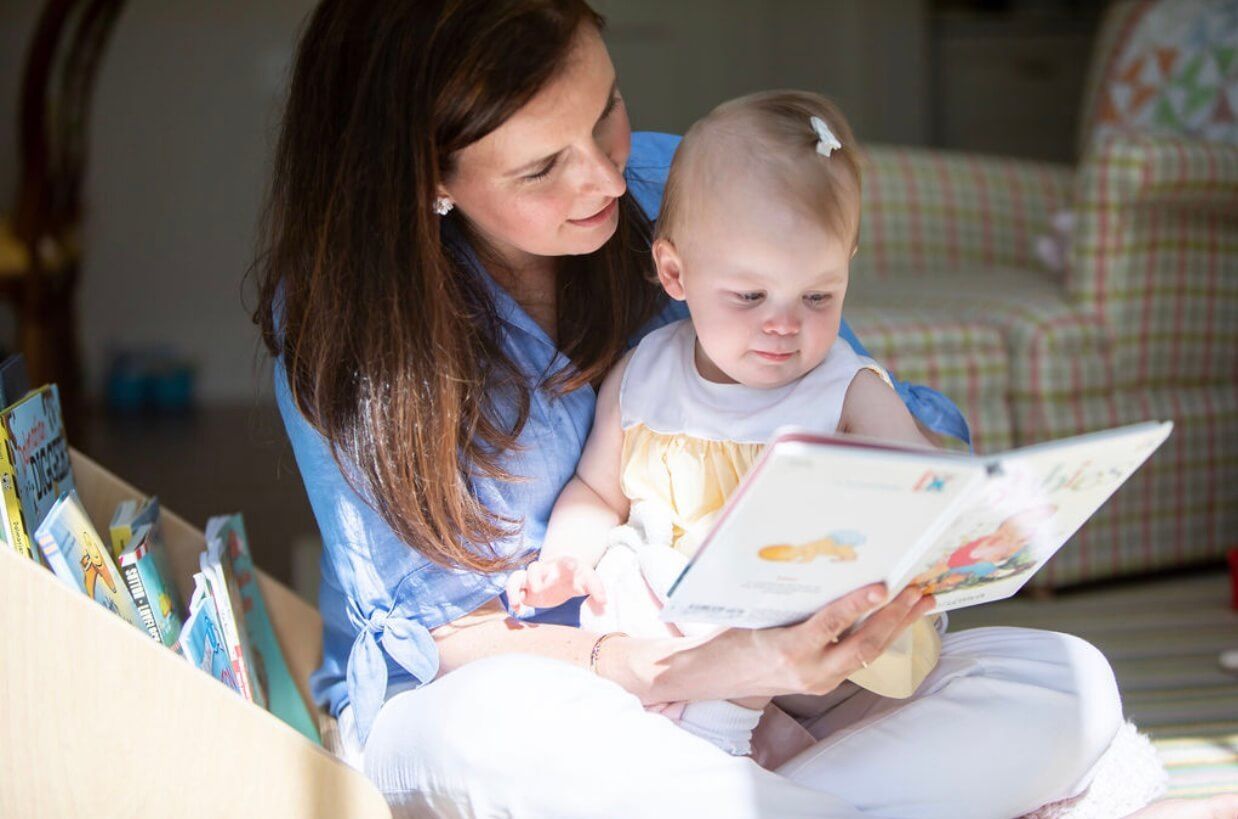
Montessori recognized that children have different needs at different stages of their development and that physiological growth is non-linear, in that there are certain stages of development in which growth is extremely prevalent. Notice, for example, the astonishing period of growth that happens from birth to three years old. On the other hand, children between the ages of 6-9 typically experience moderate growth. In addition, children in Montessori elementary classrooms tend to be emotionally and intellectually steady. They are capable of long periods of concentration and are marked by an ability to reason quite well. But as children begin to approach adolescence they once again experience rapid changes that affect their physical appearance, emotional intelligence, and mental capacity. The adults who care for these young adolescents need to recognize their specific characteristics and needs so that they may usher them safely through this period of fiery change.
Station to Station
The work of the child moving through to adolescence is clear: to become an adult. In The Secret of Childhood Montessori writes that: “It is the adult’s task to build an environment superimposed on nature, an outward work calling for activity and intelligent effort; it is called productive work and is by its nature, social, collective and organized.”
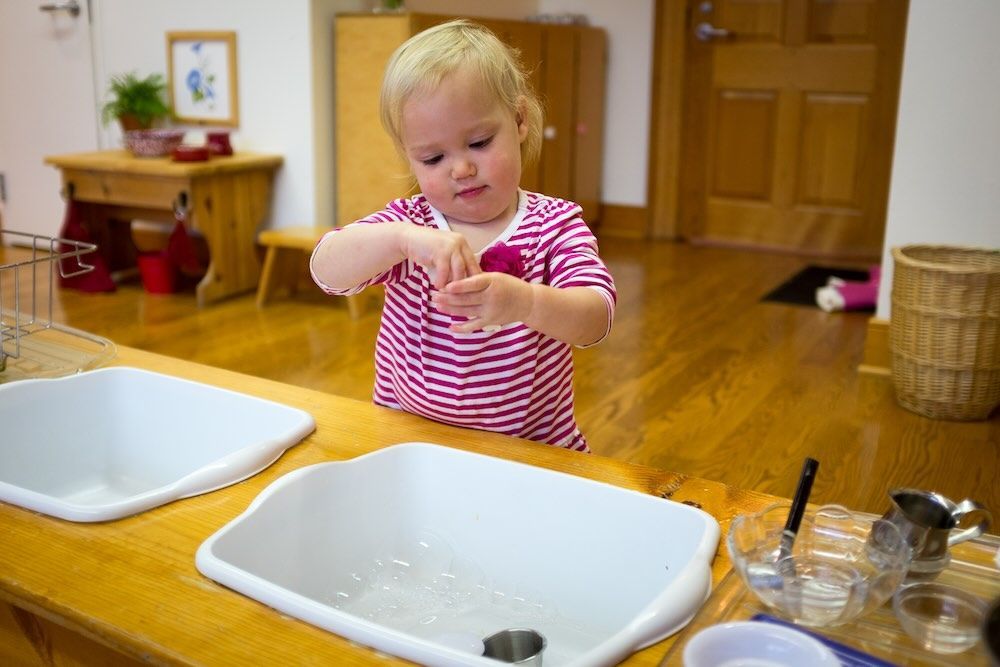
It is the nature of adult work to divide labor amongst a group. Adults tend to specialize in their work and hope to achieve maximum productivity through the least amount of work. The individual benefits by obtaining more with less energy expenditure. Children also work to produce, but the main work they do is to become an adult. This activity manifests itself in certain ways. Instead of the division of labor, the child says, “I want to do it by myself,” and eventually, “Help me to do it by myself.” So while the adult is trying to figure out how to make the least amount of effort for the most gain, the child adheres to the maxim of maximum effort.
Montessori says: “The child wastes an immense amount of energy over an insubstantial end…and in the exact execution of every detail.” So the child is internally motivated rather than externally motivated, and this is why we adults can become exhausted by our work while children can be utterly refreshed by theirs. In essence, the adult works to perfect the environment while the child works to perfect being itself. Montessori called the child “an extra social being par excellence” in the sense of one who cannot take part in society’s productive labors or in the regulation of its organization.
However, the Montessori elementary student is prepared to intellectually take on the universe. Armed with reason and imagination, the elementary child studies topics ranging from the vastness of space, to microscopic organisms, to ancient humans, to the migrations of societies, to mathematical and geometrical principles, to industry and trade. The sky is the limit as children induct themselves into the whole history of human evolution and thought up to this distinct moment in time in a mere matter of six years. They learn to be grateful to those that came before and to appreciate all of the aspects of human life that exist to meet their physical and spiritual needs. And then, adolescence sets in, and just as the newborn grows into a toddler, the child transforms into a young adult.
Teenage Wildlife
Though sometimes our adolescent children may seem very adult-like, it is important to recognize that this is a transformative process. Indeed, Montessori refers to adolescents as “social newborns.” This does not mean that the child is just becoming social, because that’s been happening all along, especially in our Montessori classrooms. She means that the child is a newborn adult or a newborn member of adult society. This kind of person can “take an active part in society’s productive labors or in the regulation of its organization”.
The characteristics of the adolescent are centered in transformations that are expressions of human nature. Montessori says that they are the characteristics of the “social man who does not yet exist but who is already born” who “is created but has not yet reached full development.” This period of development she says is, “an epoch of inner revelations and of social sensibilities.”
The final goal of growth is the work of self-definition that takes place during adolescence. Adolescents find out who they are and what use they are to society. As a mentor of mine, John McNamara of Ruffing Montessori tells it; adolescents begin to make judgments about themselves that move from the realm of quantitative; “How good am I?” to qualitative; “How am I good?” He says it is the difference between speed and accuracy with math facts. If we emphasize speed, we push the child to inaccuracy, which becomes ingrained and difficult to outgrow. If we emphasize accuracy, then speed takes care of itself and the child obtains both speed and accuracy. The same is true with maturity: growing adolescents must find out what they are good for, and they do this by finding out what they are good at.
There is more to life than seeing the goal, however. There is the hope or desire of finding the right path and successfully reaching the goal. It follows that adolescents must discover what they are good at, and have the feeling that they are good at it. It is the feeling of confidence coupled with the conviction to aspire to that which is in their reach. As adults, we can aid in building this confidence by meeting the needs of the adolescent to enter into adult work.
Montessori says: “Children by the age of twelve should already be taking an active part in social life; they should be producing, selling, and working, not in order to learn a trade, but because working means coming into contact with life, participating in the building of the supernature.”
Hang on to Yourself
Our Secondary Level hopes to initiate the child in such a way by preparing an environment fit for adult work and based on some immutable foundations of society: trust, respect, freedom and responsibility. The components of our classroom are threefold. The environment is based in our classroom, but emanates out into society through the planning and execution of work trips that include volunteerism, and community building. The materials are provided as motives for activity. Often the materials in our classroom change based on the individual needs of the students. The adult is ultimately the link to and the custodian of the environment and the materials.
Our classroom is a constructive environment that fosters an admiration for, and understanding of the life and work of humanity. It is also a community for adolescents in which they can find meaning and participate in the social and working life of adults. They do this through a curriculum that includes, but is not limited to, science, mathematics, literature, history, art, research, and elements of practical life.
It goes without saying that how an adolescent interacts with the world is important for their development and in the ten years teaching the Secondary Level, I’ve seen the best outcomes when parents are present for their teenagers, just as much as they would be for a newborn. When parents remove obstacles to development that distract and allow their children to participate in the daily life of the home in a meaningful way, they are helping to induct their children into the work of adult life and therefore meeting their needs. Parents can also be helpful by linking their children to opportunities for jobs, volunteerism and acts in the community. It helps them to work with other adults who have specific points of view and they can see how the work of adults varies and why it matters. Montessori said it: “All work is noble, the only ignoble thing is not to work.”