Submitted by Laura Earls, with edits and contributions by Margaret Kelley
In a Montessori classroom, experiences with art, culture, and nature are embedded in the curriculum. Instead of viewing these parts of life solely as separate categories for study, Dr. Montessori believed that they were also inherently intertwined with the children’s daily lessons and work. So much of a human being’s relationship to art, culture, and nature is simply a relationship to beauty. Children who learn in a Montessori environment come to see beauty everywhere—both as something to create, as well as something to appreciate. This ability serves them throughout life, deepening their relationship with art, culture, and the natural world.
As teachers, we make sure to celebrate true beauty—encouraging it and elevating it in all aspects of the classroom. By showing the children how to create it through their work, how to appreciate it in the world around them, and how to engage with it in nature and culture, we give them a map for incorporating it into their lives as they venture outside of the classroom. These lessons provide children with a foundation for always appreciating the beauty they find around them, both manmade and natural—giving their lives meaning, and making the world a precious and cherished place to live.
Art
Making Work Beautiful
A Montessori teacher helps their students to strive for beauty in their work. There are distinct art lessons, but there is also the practice of making academic projects beautiful. When children bring their work home, parents may notice that no single sheet of paper is left plain! Once a child completes a piece of paper in any subject, they may decorate their work. Ornamentation on their finished reports is a lovely way for them to feel that their work is special and very much their own.
These designs grow in complexity and meaning as they learn more from the Montessori curriculum. A teacher may give them a lesson on “illumination” (decorating a text) and show them examples of illuminated manuscripts from the Middle Ages. They may then illuminate their own work on occasion, thus relating their personal desire for beauty with the activities of ancient people! The children also may learn to do calligraphy; to make and marble paper; to book-bind or use ribbons to tie up their booklets; and to make charts or scrolls. With these small additions, the children have pride in their work, take care to do their very best, and love making it beautiful.
Culture
High Quality Literature
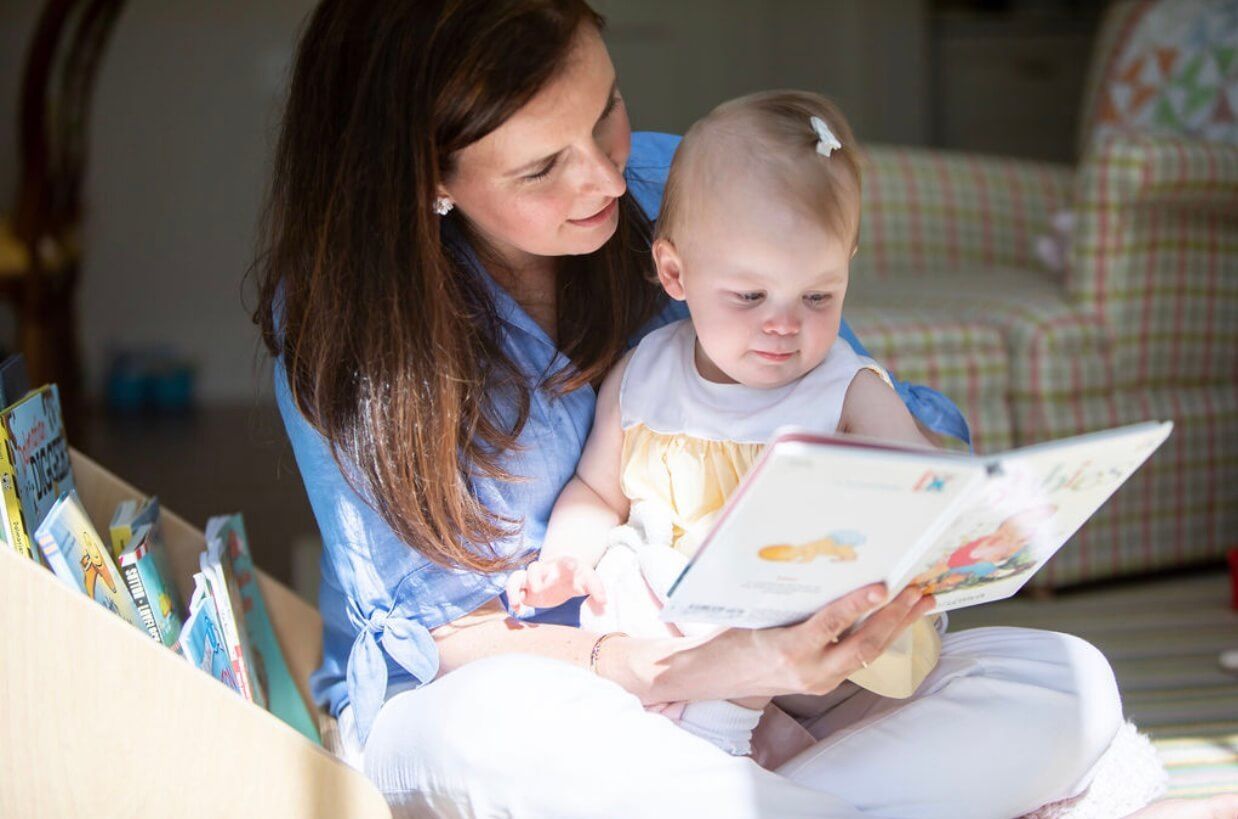
High quality reading material serves your children in their relationship to the written word. There is such a vast array of books today that the task of choosing appropriate ones for your children can be daunting. The local library or bookstore often has lists of Caldecott and Newbery Award winners, as well as recommended reading lists. It is important to uplift the children's spirits and show them that there is goodness, beauty, and excitement to be found in the world of reading.
When parents read aloud to children, they can choose books of all subjects and writing styles. They may first read a biography of Lincoln, then a fun story such as Mr. Popper's Penguins, followed by a selection of poetry, and then a story of courage, followed by a fairy tale. They may also read children’s stories about Dr. Maria Montessori. When the children hear about the development of Montessori schools and materials, they are thrilled: “Oh! The sandpaper letters! I worked with those!”
In addition, it is important for children to have a silent reading time at home. At our school, they read quietly after lunch, which gives them time to become engrossed in their books before they go back to work in the afternoon. This special time shows that each child’s imagination deserves occasion and space. It shows respect for this very special undertaking.
Music and Movement
Beauty can be expressed and experienced in music and dance. These are forms of communication, a natural human tendency, here spoken in the language of the spirit. In music, the children learn to sing, compose and write music, and identify musical styles and composers. In the classroom, teachers often choose to play classical music, which touches the soul. It can play in the background during the children's arrival in the morning, as well as occasionally during their silent reading time.
At other times the children will listen to and interpret a certain composer's use of different techniques, dynamics, or instruments. They love to talk about how Bach's Toccata and Fugue in D minor made them feel or try to pick out the harp in Tchaikovsky's Swan Lake. They also like comparing different pieces of music and choosing their favorites. Sometimes a teacher will show the children how to draw abstractly while they are listening to music, trying to follow the sounds of a composition.
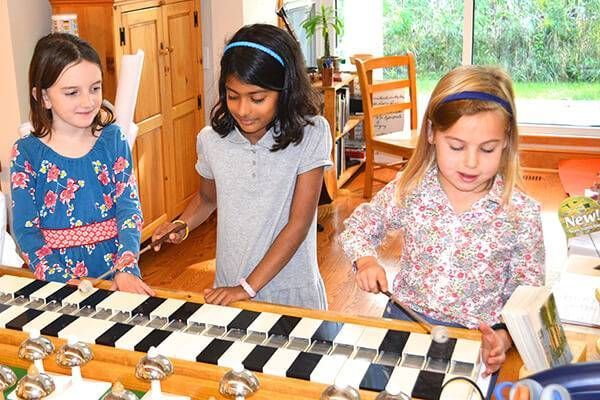
In addition, music is incorporated into movement, dancing, rhythm, and listening exercises. Montessori classes often exercise indoors in the winter, through stretching, walking or marching to different beats, or moving to different music. They also learn dances that are from a variety of nations and combine singing with dancing done in circles. The elementary children love these because they are done in a group and because they are fun and beautiful. They bring out peaceful, cooperative behavior in the children.
*There are, of course, even more ways that children learn about and experience culture in the classroom! Literature, music, and movement simply serve as a starting point for engaging with this important part of the human experience.
The Natural World
Finding Beauty in the Everyday
It is important for the children to learn that everything has the potential to be beautiful. Work can and should be joyful. Adults can celebrate the simple pleasures of life with them. When I was teaching, there was one October day when it began snowing in the middle of our day. It was the first snow of the season, and soon every child had discovered it and was in awe of its beauty and newness. We gathered around the windows, and I read poetry on snow:
The more it
SNOWS-tiddely-pom,
The more it
GOES-tiddely-pom
The more it
GOES-tiddely-pom
On snowing.
And nobody
KNOWS-tiddely-pom,
How cold my
TOES-tiddely-pom
How cold my
TOES-tiddely-pom
Are
Growing.
— A.A. Milne
Then we sat quietly for a minute looking out, and one child asked, “Could we go outside and do a snow dance?” So the children joined hands in small groups and danced in circles together. It was a small piece of beauty, inspired by the nature of the child to discover and embrace the divine.
The Importance of the Outdoors
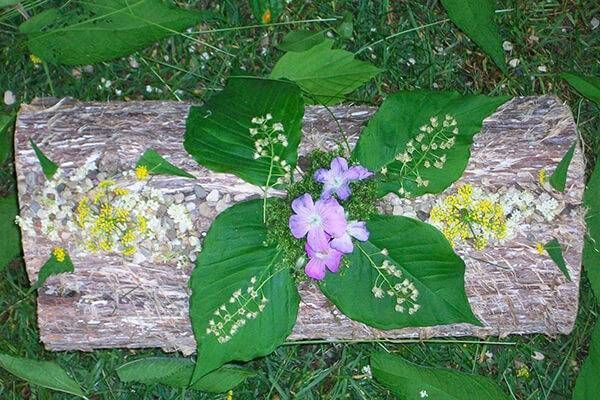
In the autumn, children can collect leaves, then do leaf rubbings, classification, collages, and artwork. In the springtime, they can go out and examine the miracle of new life in nature. They learn to appreciate the beauty surrounding them in their everyday lives.
It is important that the idea of respect for all extends to the outdoor environment. They go on nature walks to observe the beauty around them. They go to the park and take some time to lie on their backs, in silence looking up at the sun streaming through the leaves; they close their eyes and listen to the leaves rustling and the birds singing. They take it all in.
On the last day of each school year, I used to take my class on a walk to Lake Michigan (just a few blocks from our school) and read poetry in anticipation of summer. We would then look out at the lake and each child would draw or write a poem or story. It was an extremely peaceful time for us, to be together while each being alone. It brought us together at the close of the year with a sense of the importance of community and a recollection of the special qualities of each other. It also reminded us of the great gifts we had and made us grateful.
Final Thoughts
All of these experiences deepen a child’s relationship to the beauty in the world around them. They learn to make it themselves. They learn to appreciate it in books, music, dance, and nature. They learn that there is beauty everywhere, just waiting to be noticed.
Childhood is an especially ripe and vulnerable time for developing love for the world they live in. T.S. Eliot wrote, “We could never have loved the earth so well if we had had no childhood in it.” These are the years when children learn to love their earth. These are the years when the foundation for meaning and stewardship is built.
By being a part of a Montessori environment, and appreciating the beauty embedded in all parts of their world, children are inspired to live good lives, where they seek and create meaning, where they take on responsibility for caring for this world.
It is these very children who will inherit the earth. And first they must learn to love it.