Winter Weather Fun: Braving the Outdoors
We all know it’s important for our children to get outside and play. But what about when the weather is…well, uncomfortable?
This is when having good equipment, and knowing how to use it, is paramount. Every year, I spend that first icy blast of winter shuffling between buildings, chiding myself, “There’s no such thing as too cold, just bad clothing choices.” After a few weeks, I finally get into the habit of layering and sealing myself off from the cold, and I marvel at the change in my comfort and approach to winter weather.
In Contact with Nature
Starting from the time they are very young, we can make it possible for our children to enjoy all kinds of winter weather fun. By preparing them with the right equipment and modeling the outdoors spirit, we give them many gifts: Wisdom in how to care for themselves, respect for the elements, healthier more active lifestyles, and the peace and renewal that comes from being in nature. We must actually experience being outside to gain the benefits; Montessori wrote, “There is no description, no image in any book that is capable of replacing the sight of real trees, and all the life to be found around them, in a real forest. Something emanates from those trees which speaks to the soul, something no book, no museum is capable of giving. The woods reveal that it is not only the trees that exist, but a whole, inter-related collection of lives…[that] no one can bring into the school…How often is the soul of man – especially that of the child – deprived because one does not put him in contact with nature.”
Bundle Up
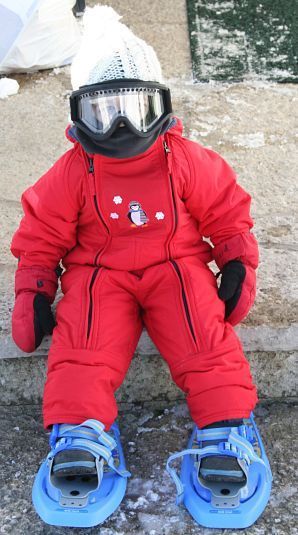
When my son and daughter were little, they went outside after school almost every day in the winter, even when the temperature was in the teens and the wind was blowing. They wore heavy wool socks, polyester-fabric long underwear top and bottom, snow pants and parkas, wool sweaters, wool hats, thick mittens that came high on their forearms with straps that sealed them securely over the coat-sleeves, face masks, neck warmers, and ski goggles! They looked like astronauts, but they were happy as clams out there. Not a single inch of their skin was exposed to the cold, and because they were moving their bodies, they were warm enough to enjoy some fresh air and all that nature gives us in winter.
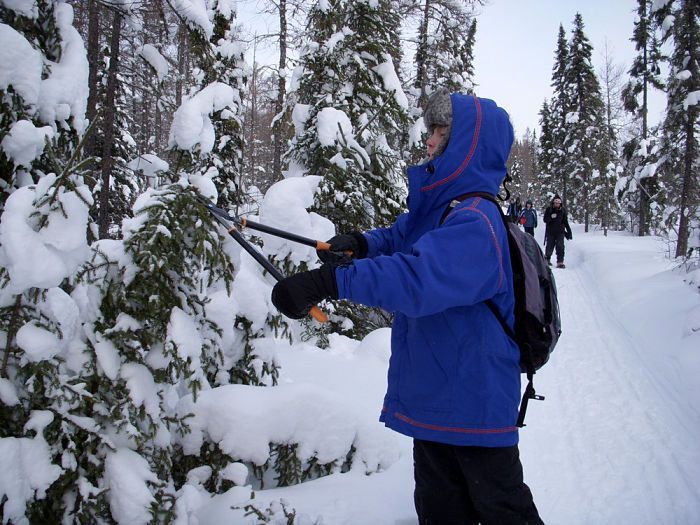
Our daughter, now an adolescent, traveled this month on a school trip with her Forest Bluff Secondary Level classmates to Ely, Minnesota – where temperatures typically hover around zero degrees – to cook, sleep and work outdoors for ten days. The group spent weeks preparing, learning about how to help one another and themselves stay comfortable and safe in such temperatures. The students served the Wintergreen Dogsledding Outfit by clearing sledding trails of brush and tree branches, using sleds and work dogs. This school trip is incredibly challenging but deeply rewarding; I consistently hear that almost all our Forest Bluff School graduates refer to their experiences on their Secondary Level Winter Trip in high school or college entrance essays. Our adolescents build great strength, fortitude and reserves for teamwork in the extreme outdoor setting.
Prepare and Enjoy
At other times of the year, we and our children face very windy days, rain, and other varieties of uncomfortable weather. We can still find ways to get out into it and enjoy what the outdoors offers. Whether or not our children mind being wet, hot or cold in order to be outside, we still need to teach them to prepare and wear the best equipment to keep themselves safe. Quality fabrics and equipment may be costly, especially since our children change sizes every year, but if you get just one of each item and the children really use them, these purchases may reap great rewards for your children in their full development. You might share your used items with extended family members or other Forest Bluff families when your children outgrow them. We have a culture in our school community of loving the outdoors, and we want to encourage it for our growing children.
At Forest Bluff School, our students go outside in the fresh air several times a week. For instance, 6-to-12 year olds have a work choice of forming groups of four and playing outside during the day, as long as they have the proper equipment for the conditions and have been working responsibly in the classroom. They also go out as a class with their teacher to play games, learn sports or to learn a skill, such as how to build a real snow shelter. Spending time outside, in every kind of weather, is an important part of the children's school experience and forms some of their fondness memories of Forest Bluff School.
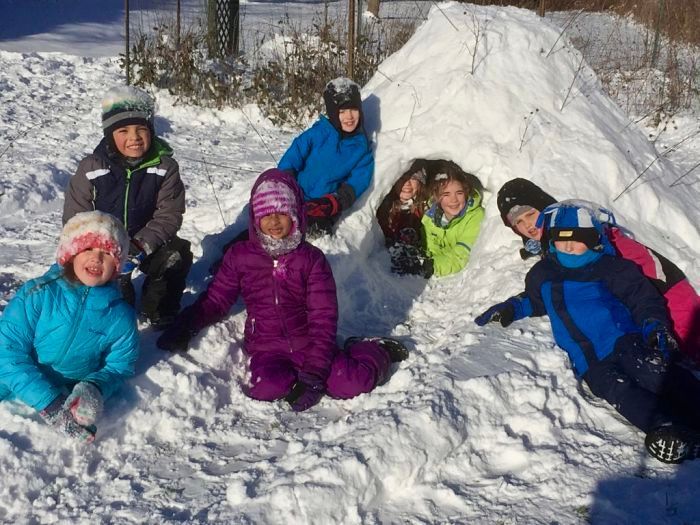
Montessori told us, “Set the children free, let them have fair play, let them run out when it is raining, take off their shoes when they find pools of water, and when the grass in the meadows is damp with dew let them run about with bare feet…; let them rest quietly when the tree invites them to sleep in its shade; let them shout and laugh when the sun wakes them up in the morning, as it wakes up every other living creature which divides its day between waking and sleeping.”
Seize This Day!
Winter Activity Ideas:
- Walk in one of our Lake Forest Open Lands Preserves all around Lake Forest (dogs are welcome in many areas and some trails are prepared for cross country skiers)
- Go to a Lake County Forest Preserve and look for animal tracks, water that has iced over, berries or leaves still stuck on branches or birds.
- Rent cross country skis at the Heller Nature Center in Highland Park
- Go skating at Artesian Park in Lake Bluff or West Park in Lake Forest
- Go for a winter picnic in the woods – bring thermoses of warm foods to be eaten right out of the containers. If a utensil is required, make sure you will be able to handle them without removing your gloves or mittens.
- Have an outdoor fire to roast marshmallows or just to enjoy the warmth. There is something magical about fire, especially when you are outside under a nighttime sky of stars.
- Skate on patches of ice near your home. (Our children discovered a flooded area in the woods behind our house years ago and still amuse themselves by skating on it. It’s only about 6 inches deep, so they can do this activity independently and safely).
- I know some families who have flooded their yard to create a “rink.” Ask for some advice on this, as I have never done it.
- If we’re lucky enough to have snow, build a snow fort, snowman, tunnels… There’s so much to do with snow!
- Go birding or on a nature walk with a theme, led by Lake Forest Open Lands or the Botanic Garden
- Go for a walk in our many preserves and look for signs of winter – berries on branches, birds, owls, identify trees, animal tracks in the snow. Many of our nature preserves have classes to teach young people about these and other wonders of nature in the winter. Lake Forest Open Lands, the Lockhardt Center (also called Mellody Farm) on the corner of Waukegan and Deerpath roads has maps and pamphlets that may give you and your children ideas for your own nature walks.
Places to get gear:
- Gearheads
- REI
- LLBean online catalog for kids
- Land’s End online catalog for kids
- Lake Forest Bootery for winter boots and rain boots
Interesting Tidbit:
Paul Schurke, who founded the Wintergreen Lodge, where our Secondary Level students work on their Winter Trip, has been to the North and South poles with sled dogs and is an expert in winter outdoor expeditions. He’s been written about in National Geographic Traveler Magazine, the Smithsonian, and Outside Magazine among many others, and has been featured on Good Morning America and the Discovery channel as well as other programs. He loves having our Forest Bluff students help Wintergreen by clearing their trails every other January!