We have begun this school year with a renewed need for the perspective, courage, and resilience that carried us through a troubled spring and a summer of renewed fears: covid variants, vaccine breakthrough cases, many remaining covid restrictions—all of which work against our mission with children. Indeed we are living again, not in the life-threatening and challenging times of a year and a half ago, but, nevertheless, in a setback from where we hoped—and expected—to be.
Yet, as with all setbacks, good things happen in our human task on earth. We “overcome evil with good.” We develop a further awareness that we can’t control our universe; we only defeat one enemy and another appears. It is the story of human history from our beginning. Over time, however, as these experiences help us to develop realism about our own capabilities, our hubris fades and we grow spiritually. We realize our dependence and ultimate need for each other, as parents and teachers, in carrying out our mission for our children. Above all, we become more deeply aware of Creation itself and the Power that sustains it: of all humanity; and the progress of our human civilization from its beginning. It is this recognition, so uniquely the foundation of Montessori education, that enables us to present to our children the natural world and human achievement within it as a gift to them, eternally deserving of their gratitude and appreciation.
Nurturing the Human Spirit
As parents and teachers, we help our children to sustain this vision of gratitude and appreciation by meeting each new day with the resilience and optimism of a strong spirit. We live in a great and free country whose people are getting up every day, working and raising their families, and living by the values of civil behavior toward all. We are part of this greatness of humanity. In Montessori, we focus on this greatness for the children through a realistic appraisal of human progress since our beginnings on the earth. Truly, we face nothing new in human history today. It is just new to us.
Regardless of the problems of the world at large in any given year, there is always an opportunity for renewal for the human spirit. The Montessori approach has this appeal at its center. E.M. Standing, Dr. Montessori’s oldest and most intimate collaborator for the last thirty years of her life, explains it best in his book, Maria Montessori, Her Life and Work:
"One of the reasons why Dr. Montessori’s lectures had such a widespread appeal was that she never treated educational problems on a purely technical or utilitarian level. Her appeal was always to the spirit...Even when Montessori was dealing with a subject like arithmetic or grammar the spiritual element was never absent…She saw in every school subject an activity of the human spirit, and therefore treated it with a corresponding dignity and breadth."
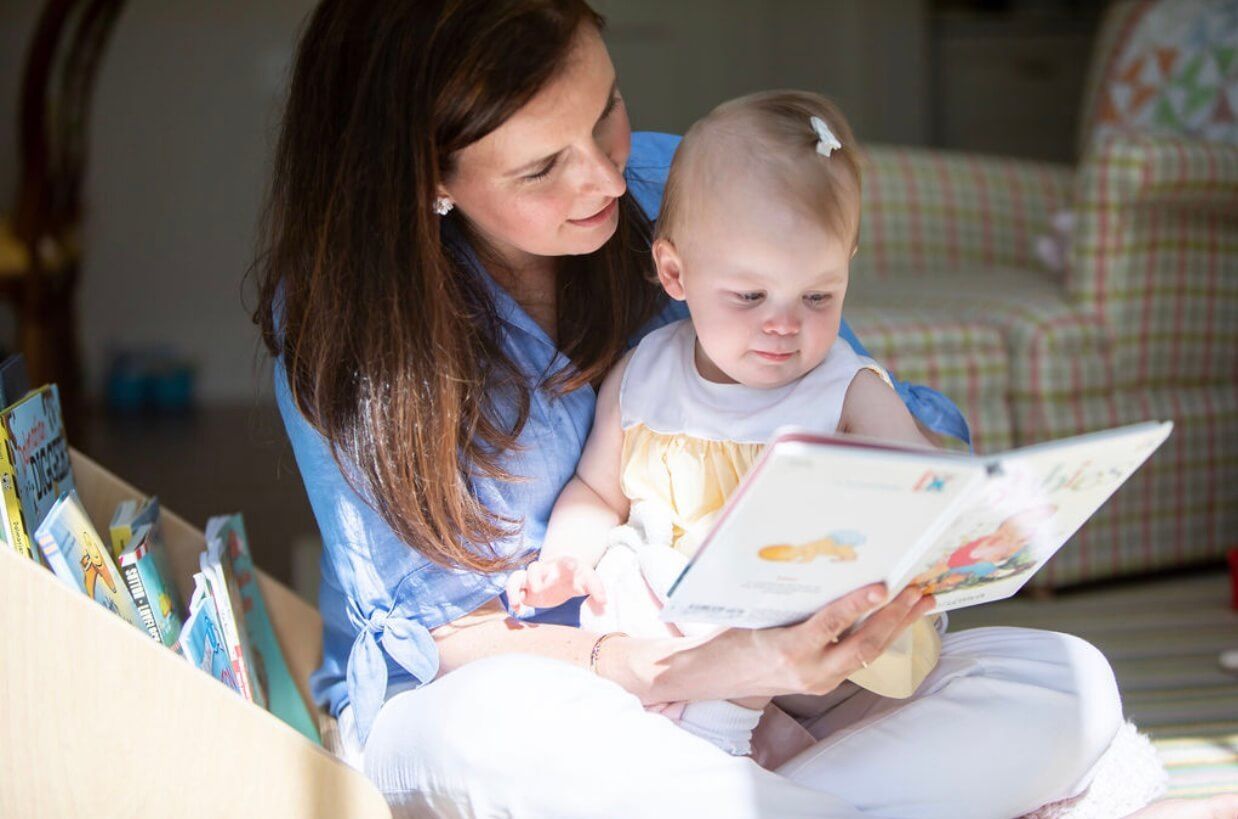
To this end, our own spiritual development, both alone and in communion with our children, is our most important work. There are many distractions in this world, and our most vital activity is being present with our children in meaningful and joyful ways, whenever opportunities present themselves. The more that we can slow our pace, admire the changing leaves, read an uplifting book, or listen to our children’s stories—truly, whatever it is that gives us the opportunity to focus on our family life and the blossoming of our own spiritual nature—the more we nurture this part of ourselves and appeal to our children’s own strength of spirit. It is through the strengthening of our spirits that we are able to continue to meet life’s challenges and to emerge both stronger and wiser.
Maria Montessori's Life and Challenges
Perhaps Dr. Montessori’s ability to grasp this understanding of the primacy of the human spirit is the result of the resiliency and courage with which she faced the struggles of her own life—for they were legion. I share her story here because I have always felt uplifted when I am reminded of the fortitude she exhibited and of the way her courage and wisdom deepened with every challenge she faced.
At a time when women were barred by tradition and culture to do so, Dr. Montessori began a professional life by graduating from the medical school at the University of Rome in 1886. First as a practicing physician, and soon, in addition, as a renowned educator of young children, she earned the respect and admiration of her colleagues throughout Europe in both fields. However, when Fascists became dominant in Italy, Standing tells us, “she came to realize that an education which had as its aim the development of a strong and free personality could not thrive in a totalitarian atmosphere.” The Italian government closed all her schools, and the Nazi governments of Germany and Austria followed their lead, even burning an effigy of Dr. Montessori over a pyre of her own books in the public squares of Berlin and Vienna.
Undeterred, she started her work over again in Barcelona, Spain, setting up her headquarters there, and continuing a life of travel to train teachers and set up schools in many countries. Next, the Spanish Civil War commenced. She managed to escape the country on a British battleship, but with only an hour’s notice, so that all of her papers and work of many years had to be left behind. Now sixty-five years old, Dr. Montessori settled in Holland, establishing a school and training center there, while continuing her work worldwide.
The outbreak of World War II found her in India. She was held there for seven years, as an Italian national, along with her adult son, Mario. Despite the privation of separation from family members and constant fear for their safety in Europe, she successfully continued her work: training teachers and establishing schools throughout India. In fact, this opportunity for thorough immersion in the culture of India expanded Dr. Montessori’s understanding of humanity and its history, and strongly influenced the development of cosmic education and her educational curriculum for elementary children.
Finally, back in Holland at war’s end, she had the energy and dedication at age seventy-eight to return to India in 1948, to complete commitments made there, before returning once again to Europe. She was buried in Holland in 1952, spending the last weeks of her life planning to make her first trip to Africa! She was eighty-two years old.
Because Dr. Montessori refused to be defeated by the repeated upheavals in her life, we are blessed today to live in a world where the outreach of Montessori education is more global than ever. There are training centers and schools on five continents, and for the first time, Montessori is receiving serious notice by the public school sector in the United States. This expanding national and global spread is being powered by scientifically designed research studies*, which is leading to a recognition by academia worldwide of Montessori education’s potential to revolutionize educational practices throughout the world. Her strength of spirit is the original foundation for the incredible progress her approach has made in the last century.
Moving Forward
In the course of writing this blog, I received news of a setback for Forest Bluff—expected, at this point in the pandemic, but still disheartening. One of our students tested positive for Covid-19 and is quarantining at home. The good news is that they are the only child from the class to test positive and they are recovering quickly. We face this new adversity better prepared than ever before: with lessons learned about testing and exposure; further knowledge of the virus itself and therapeutics for its treatment; the encouraging news that an appropriate vaccine dose has been approved for children as young as five years old; and, in addition, booster shots for already fully vaccinated adults.
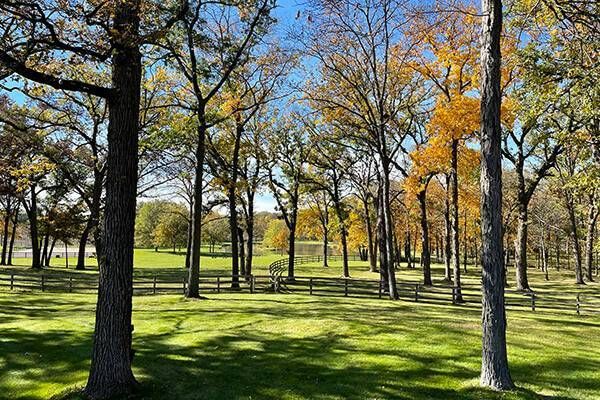
As I write today, looking out over our green pasture and pond full of geese, splashing and practicing for their flight south, and the oaks, maples, and hickory trees with their brilliantly colored leaves about to fall to the ground, becoming nutrients for new trees of the future, I am inspired by the Creator’s cycle of life and renewal. We are part of this great renewal, and so I know as teachers and parents, we will meet each new adversity, as in the past, with fortitude and strength of spirit.

One day soon, whether this winter, or if we must wait until spring, we will once again enter Forest Bluff by our main door. We will experience anew the awe and peace of our hallway with its vaulted ceiling and light from windows above. We will say goodbye to our children as they enter their classrooms, and know that they are entering a beautiful and carefully prepared space that is constantly filled with the joy of their learning together: a true sanctuary of the spirit for children and young adults.
That day is coming. We have only to be patient awhile longer, knowing that the Creator is in charge of all.
*Notes
To read the latest research on Montessori, search the following on Google Scholar:
Mira Debs of Yale University
Solange Denervaud of the University of Lausanne, Switzerland
Angeline Lillard of the University of Virginia
An audio version of Angeline Lillard’s book, Montessori:The Science Behind the Genius (Oxford University Press, 3rd edition), is also now available at audiobooks.com.