This is the second article in our spring blog series, Montessori and Executive Functioning.
As parents and educators have come to understand how important executive functioning is for a successful adult life, it has become the focus of many conversations and goals for educational practices. As more research is conducted on the relationship between executive functioning and educational practices, it has become clear that Montessori uniquely supports the development of these important life skills.
In Part I, we learned how a Montessori education helped Forest Bluff alumni to develop skills such as sustained attention, task initiation, organization, time management, and planning/prioritization. In Part II, alumni share how their schooling contributed to the development of their response inhibition, working memory, emotional control, flexibility, and goal-directed persistence.
Montessori Alumni Reflect on their Executive Functioning
Response inhibition: the capacity to think before you act
I spoke with a college senior about his relationship with response inhibition. “Being able to think before I act is more important now than ever,” he told me. “The stakes are high in college. Our work is more complicated. There is so much to accomplish, and so much involved in accomplishing it. Additionally, with the many freedoms of college, there are also many temptations and distractions. I have to make careful choices.” Response inhibition prevents us from living in a perpetual state of reacting. It allows us to consider consequences and proceed wisely.
He then reflected on how his Montessori education supported this development. “My experience with the science experiment cards in my upper elementary classroom helped me with this skill considerably. Each card would have a sequence of steps which demonstrated a simple science experiment. Failing to effectively do a step would confound the following ones. This impressed on me the importance of being discerning and making sure I was following the steps correctly.”
Students have a great deal of independence with these cards. They choose the experiment, gather the materials, perform the steps, and record the results. They are responsible for their work and the choices they make as they perform the steps, without much teacher involvement or oversight.
Our senior had more to say about his particular experience in Montessori: “Oftentimes, children learn response inhibition through positive or negative social experiences, which teach them things like manners. However, having the space to fail when working on something tangible provided a space for me to learn a different and important non-social aspect of response inhibition.”
There is an important balance of freedom and structure in the science experiment cards—the same balance that is apparent in all of the work choices available in the classroom. This gives children the space to fail, but also provides clear accountability, allowing them to recognize when they have erred. They develop response inhibition as they experience the consequences of their own decisions, and have the chance to make better choices in the next iteration.
Working Memory: the ability to hold information in your head while performing tasks
A college sophomore chose to talk to me about working memory: “At this point in my life, working memory has become crucial to my learning experience and ability. It is a skill that I’ve [really focused on] since going to college.” Working memory is what allows us to consider knowledge in our own minds as we function and produce work throughout our days.
I asked her if she had any anecdotes from her current college experience. She told me, “A specific example from my life is a lab class I took last semester. We were asked to recall notes from the previous lecture while finding tree samples, as well as recall tree identification. We were also asked to learn information while working on the trail and recall it later in the class period, and follow multi-step labs in a short amount of time.”
This class presented multiple challenges to working memory. First, the students had to bring knowledge from the classroom to the field, and then they had to bring knowledge from the field back into the classroom, all without notes. Next, they had to engage in labs that required a specific set of actions to be performed in a certain order. Activities like these are tasks for working memory, which serves what these students will need as they move into the workforce—an ability to relate and retain information in a meaningful way.
She reflected on how her Montessori education served her in these skills: “The Montessori experience inherently lends itself to working memory, because there is a process to almost everything we do. I learned how to remember and executive multi-step processes from a very young age.”
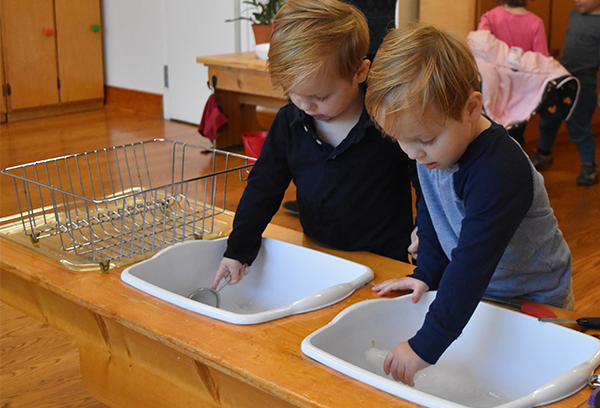
Throughout all the age levels, beginning at 18 months, the children engage in processes for every activity. There is a beginning, a middle, and an end, with many steps, which all must be completed in a certain order for a student to be successful. Because they have the freedom to engage with the process on their own, practicing and exploring through each step, they absorb the order of a process. And it becomes a natural skill for them to look for the logical steps of any activity, as well as the information needed to do the work to satisfaction, all important elements of working memory.
Emotional control: the ability to manage emotions
A Montessori graduate in her 20s spoke to me about emotional control: “My foundation for emotional regulation continues to set me apart from my peers who attended traditional schooling. I attribute my organized way of handling difficult situations and my social skills to the freedom that Montessori allowed me.”
The ability to manage emotions plays an important role in productivity and success in life. Without equilibrium, we are easily thrown off track from our goals or plans, and can struggle to make positive social connections. She went on to share, “My ability to look at social scenarios objectively and tackle obstacles with composure and logic is directly correlated to how my emotional development was supported early in life.”
Emotional regulation can be elusive. While strong feelings are not inherently negative, the inability to manage them is. One of the most powerful indicators of mental stability is the skill of acknowledging emotions without letting them overpower situations.
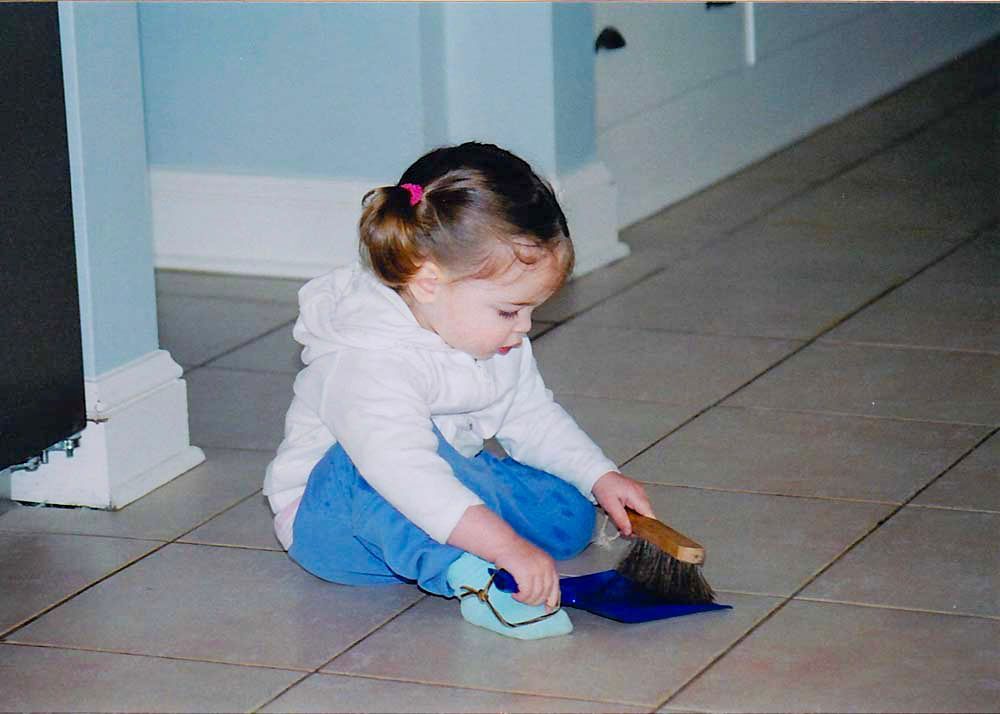
Our graduate reflected on how she thinks she developed this foundation: “I think my ability to emotionally regulate began with Practical Life activities when I was 18 months old. These activities taught me to follow a logical sequence of steps and gave me experiences with concentration from a very young age.”
I invited her to elaborate on how her concentration led to emotional skills.
“The ability for a young child to maintain this state of deep concentration and stick to a task for extended periods of time lays the foundation for emotional and personal development. These Montessori activities allow each child to reach a state of normalization and, as a result, create self-regulation. When a child is concentrating and in that normalized state they are in complete control of their emotions.”
Normalization is a term that Dr. Montessori used to describe the calm, content state that children enter after they have deeply engaged in productive and meaningful work. She observed that, indeed, normalization led to emotional regulation (For more information on normalization, read our blog What is Normalization?) Having the freedom to choose work that is interesting, and the time to deeply concentrate on this work, allows normalization—and emotional regulation—to flourish.
Flexibility: the ability to revise plans
I met with a mother to talk about her high school daughter’s experience during her freshman year. The concept of flexibility stood out for her as she considered her child: “She did not reveal a great deal of innate flexibility through her childhood.” She credits her Montessori experience with this development. She was not forced into flexibility by a top-down approach. Instead, she and her classmates learned to choose flexibility and how to thrive in an ever-changing world.
A student’s day in a Montessori classroom is not tightly scheduled. While there are specific and precise ways to do activities, and there is an overarching expectation that each student will complete necessary work over a period of time, they have a great deal of freedom to make choices and change plans as their social and academic needs evolve throughout the day. They practice and experience flexibility from their own initiative as they assess what they want to do with what needs to be done, and which peers and work materials are available to them. These freedoms increase as the children approach the Secondary Level—their seventh and eighth grade years.
At Forest Bluff, the ten-day Secondary Level winter trip traditionally alternates between an outdoor dog-sledding experience and travel to Washington, D.C., to learn about American government and history. In 2021, in the thick of Covid, her class had to cancel their trip to Washington, D.C., at the last minute and pivot to a different outdoor trip. Because students are so heavily involved in the planning of these trips, they were the ones responsible for making the changes in logistics and schedules. They were flexible because they had to be. They practiced their skills in the change of plans, and they viscerally experienced the drawbacks and benefits of changing the trip. “They had an entire trip changed,” her mother shared. “That’s real flexibility.”
Her daughter has brought this relationship to flexibility into her high school experience. Now, instead of being overwhelmed or rigid when circumstances change, her mother told me, “She not only can pivot easily, but she sees the benefit of it.”
Goal-directed persistence: the ability to stick with an action or activity in pursuit of a goal
An 18-year-old shared how her experience in Montessori served her ability to persist through challenges in high school. She told me that she viewed them as learning opportunities. Her perspective bolstered her persistence by giving her purpose and confidence.
“One of my first major challenges in high school was the first week of finals freshman year. I was not used to taking tests at all, let alone several per day for a full week.”
When I asked her how she had approached this time period, she told me she believed her Montessori experience actually gave her an advantage in the way she thought about finals. “Instead of viewing the week as a stressful hardship, I saw it as an opportunity to solidify all of the knowledge I had gained throughout the semester.”
Her mental shift allowed her to persist through the week and complete her exams successfully. “Because Montessori cultivated an environment that fostered perseverance and personal growth through challenges, I viewed each test as an opportunity instead of a hardship.”
I asked her how she thought Montessori specifically supported this perspective: “I remember when I was very young, I was struggling to solve an advanced problem I was encountering for the first time on the large bead frame [a math material]. After an hour of not being able to solve the multiplication problem, I became frustrated and impatient. I went and talked to my teacher who encouraged me to view every step of trial and error as part of my journey to success. That motivated me to keep attempting to solve the problem, as I knew that with each attempt I would learn more and become closer to the answer.”
This attitude towards trial and error is an integral part of Montessori, as is the understanding that challenges are an inevitable part of growth and education. Persevering does not simply mean plowing through hardship. Instead, as this high school senior demonstrated, goal-directed persistence thrives when a person has tools at their disposal for making challenges meaningful and valuable.
Look for Montessori and Executive Functioning Part III, the final article in our Spring Blog Series, which explores the role of metacognition in Montessori.