This past January, many parents attended Forest Bluff School’s Coffee Discussion talk titled, “Living in a Culture of Anxiety: How Montessori Helps.” It feels like ages ago that we gathered in your homes and discussed this topic. So much has changed in our lives! But as I look over my notes, I see that the principles we discussed are still relevant today. Children need time, choice, grace and courtesy/respect, routine, meditative practices, and gratitude/optimism as a part of their daily lives to develop inner calm–perhaps even more than ever! There are great ways to cultivate these themes at home; please revisit them here in light of our current situation.
Time
In Montessori classrooms, children are not rushed; there is an uninterrupted work period all morning long. They can sit with a piece of work and look out the window and contemplate, they can think, they can repeat and try something over and over. They do things that to adults seem like a waste of time, but they are often working through something internal. By not interfering with their processes, Montessori teachers allow children to develop at their own pace, and we see that they develop their ideal pace for themselves. When adults respect this process and work with it rather than imposing their own agenda, children not only learn deeply, but they also learn to follow their own inner direction. There is always more happening than meets the eye.
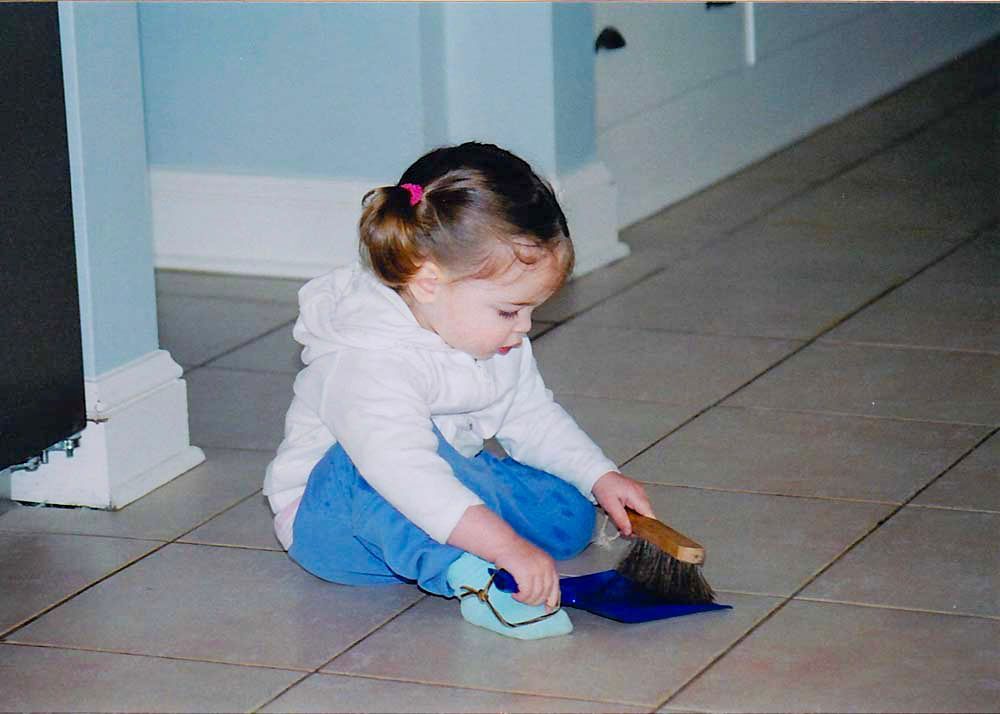
AT HOME: Set up a work period of roughly three hours for every morning, and protect the space for concentration. Allow your children to dabble as they settle into focusing on something. Some children take time to get started, but may do best if you leave them alone and do your own work. Model for them by “minding your own business”! Children will eventually give up trying to get your attention and start to entertain themselves. As long as their activity is not damaging to anyone or anything, let go of your expectations and leave them be. Set a few simple guidelines, such as cleaning up after themselves before moving on to new work, and not disturbing adults or siblings. Roughly three hours each morning can include self-chosen breaks, refreshment and clean up time.
Choice
When children enter their classrooms, they are allowed to choose their activities from the ones they have been shown. This differs slightly by age group and development:
YCC: One- and two-year-olds may choose from anything they see available. Their concentration cycles are fragile at these ages, so if they begin working with something—anything—the adults try not to interfere, unless the child is handling something destructively and needs to be shown how to do it properly. If they decide to use it destructively again, the adult redirects them to something else or takes it away. The children learn to choose to control their behavior in this simple way, when adults are consistent and confident.
Primary: 3-6 year olds may choose only from what they have been shown by the adult in their classrooms. They have new choices added to their repertoire every week to supply variety.
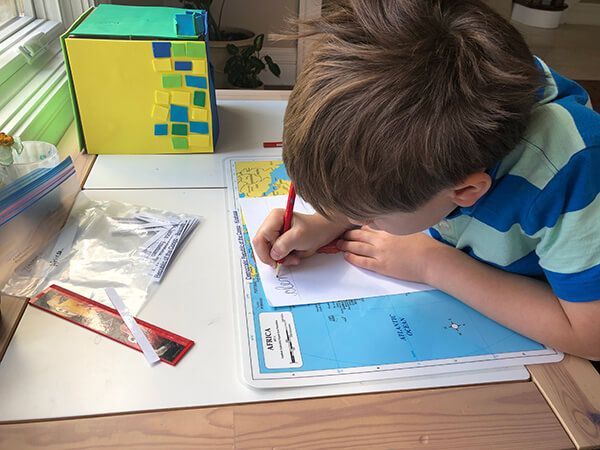
Elementary: 6-12 year olds have more responsibility to choose a balance of topics. To help them manage their time and choices well, they record their work activities in a journal every day and review it once a week with their teachers to learn to make beneficial choices.
AT HOME: There are many ideas for work choices under the FBS Families tab on the website. Find something from each category and offer the choices to your child. If they are older, they can read the choices themselves and select what they would like to do. Your child’s Director can elaborate on the website suggestion lists in individual phone calls and will make more specific recommendations.
Grace and Courtesy/Respect
In Montessori, we give formal demonstrations on how to extend courtesy to others gracefully. Younger children are eager to mimic such demonstrations, so modeling behaviors is an important part of the Montessori teacher’s role. Grace and Courtesy covers topics such as how we carry a tray with two hands, how we walk slowly past a shelf without bumping it, and how we ask someone to pass an item. With children who are older than six, teachers use humor and reasoning to talk about behaviors and then the children practice them with each other.
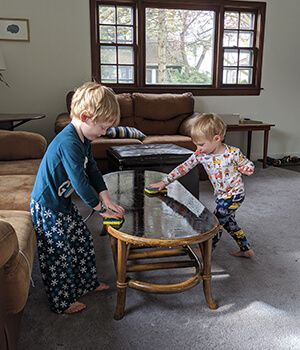
AT HOME: You wouldn’t tell your friend what to do, how to do it, quiz them on what they know, or be punitive with them, and these are things adults have to be careful not to do when speaking to children, too. The Montessori approach cloaks us with mutual respect, so that children are invited to join adults as partners in work. When you ask your children to join you in your housework and tasks, you can invite them and then expect them to participate. This may require a “sit down” as family to set the course, but it is worth the initial effort.
A hidden positive in what we are all going through right now is that there is a REAL need. This need is not fabricated in order to teach our children work ethic and consideration for others—it is sincere! While we do not want to overwhelm our children with the full magnitude of what is happening in the world right now, they do witness the solemnity. They are the future, and they are more resilient than we are. They can handle being told that there is no room for distracting behavior right now and that their participation, between the walls of their own homes, is needed, valued and appreciated right now. Model the courtesy you expect from them, and they will follow suit.
Routine
In the classroom, the same schedule is maintained every day. Children know what to expect, and when something is going to happen. This regularity gives them stability and comfort.
AT HOME: Maintaining a daily routine throughout these days at home is tougher for some of us than others. Paula Preschlack, for one, had a hard time the first couple of weeks! But living with a routine is vital for the youngest children especially, and we all benefit. It can help to set reminder notices to alert you to change tasks and when to prepare and eat lunch, for example. You might write up a simple daily schedule to run the dishwasher once a day around the same time, go for a walk every afternoon between 3 and 5, and so on. This routine can be as loose or as strict as you need it to be, but the predictable rhythm is what counts.
Meditative Practices
Time for reflection and meditation is built into the classroom environment. Montessori recognized that engagement with work needed to be balanced with restorative practices in order for children to integrate what they had learned, and also to balance their minds. For the younger children, there is an activity known as “walking on the line” where children walk carefully around an elliptical shape on the floor. These quiet moments allow their bodies and minds to find peace. There also is an activity called “The Silence Game.” Here, the entire class sits in silence together for one minute or even 30 seconds (depending on the group). In this experience, they recognize how silence is something a community creates together when every individual contributes by holding herself or himself still and quiet. Such moments of silence also helps them to notice all the sounds happening around them, such as birds chirping, the wind in the leaves, or a distant lawnmower.
Throughout the classrooms, there are other informal ways of establishing these meditative practices. Children of all ages may choose to observe another child working, but only if they are quiet and do not interrupt. It can be restorative and also inspiring to watch another peer at work, and it allows a child moments of quiet reflection. There is also a spirit of patience in every classroom. Teachers do not rush children at work, and this allows them to be fully present for all aspects of their day.
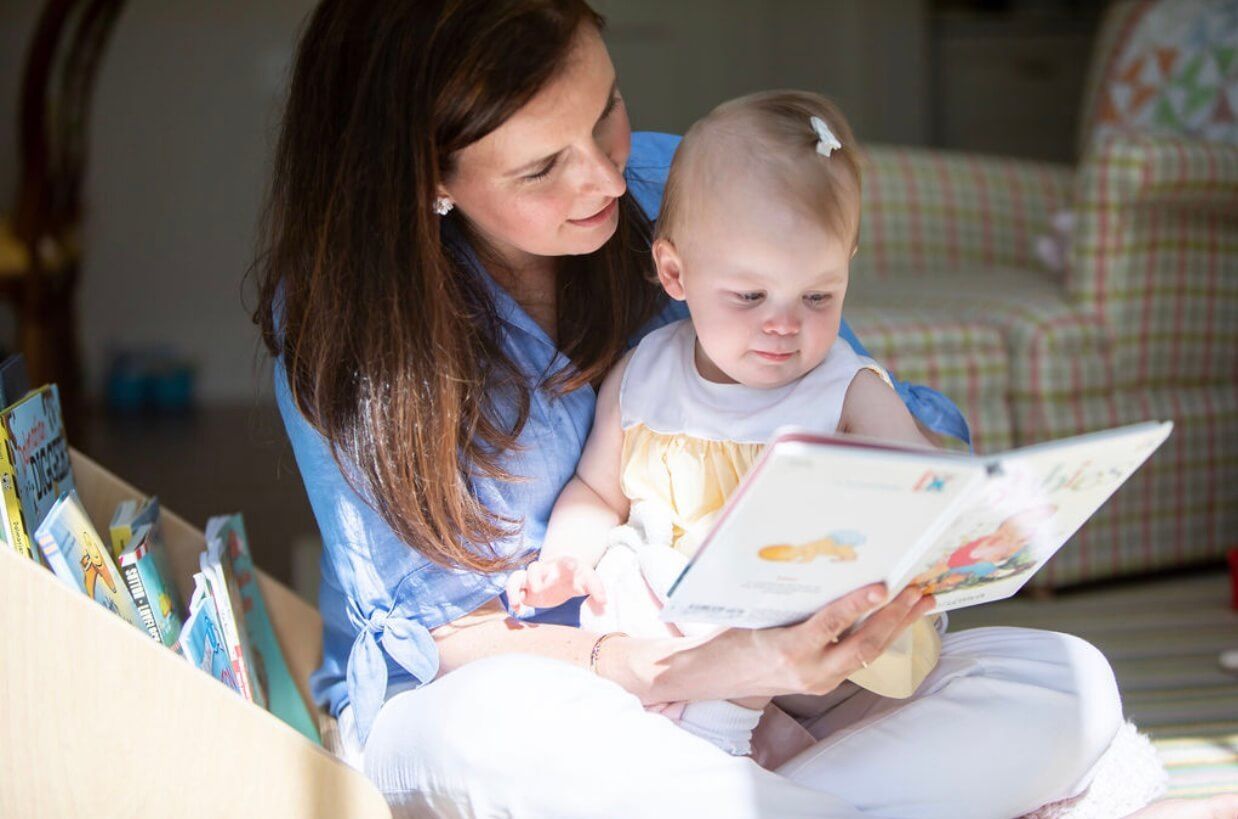
AT HOME: Meditative practices at home could be simple rituals like lighting candles at meals, reading aloud at the same times of day every day, or walking silently for a few minutes in the woods or down your street to listen to the sounds of nature. Children can also play a game like “look for five things you can see from where you’re sitting, and then we’ll share what we noticed”, they can knead bread dough, or set the table. Even brushing one’s teeth can be meditative if you pay attention to what you are doing and slow down.
Optimism and Gratitude
The best “lesson” for optimism and gratitude is the adult’s own modeling. Montessori teachers aim to exude confidence and calm. They smile, they feel joy, and they express regular thanks. They are mindful of their language and attitude as they embark on their daily activities and talk about the future. Children are so sensitive and they watch adults very closely. One of the greatest gifs we can give our own children is to demonstrate a real sense of optimism and gratitude.
These principles also carry through in the way that lessons are taught in Montessori classrooms. Much of the history and science lessons are taught with the language of sincere gratitude for the human beings who came before us and for the elements of our universe that make survival possible. Similarly, a lesson known as “The Interdependencies Chart” explicitly presents the ways that the natural world, and we humans in it, depend on one another in multiple ways.
The teachers’ interaction with the children’s work cultivates these same themes. If a child has made a mistake, the teacher does not correct him or her directly. They simply notice and demonstrate again, with a quiet but distinct focus on what the child may have missed before. This gives children the confidence to try new things without fear of failure. Repeating efforts to try to improve is a part of the Montessori child’s mindset, for life.
AT HOME: Look for stories in books that generate optimism and gratitude. For elementary-aged children, I recommend The Railway Children and The Treasure Seekers, both by EB Nesbit, and the classics Pollyanna or Little Women. These make terrific read-alouds. We also recommend any biographies about figures who have lived through challenging historical times. For younger children, pick out your favorite books that make you, the reader, feel good! Share those over and over with your young children. And tell your own stories and those of your relatives.
You could also find a daily quote or a reading to share, and encourage your older children to do the same. Younger children can say a word before bed about the day, like “love” or “mommy”, or whatever word makes them think of this day. Prayers of gratitude and random acts of kindness—whether to neighbors, others, or within your own household during the day—go a long way. This is the time for it!
Optimism is born from gratitude! Children are optimistic by nature, but we are wise to feed this nature and cultivate it in ourselves. For adults, the tougher the situation we live through, the deeper the optimism that grows out of it. Dan Baker wrote about this in What Happy People Know, and this is a great time to revisit that book!
You're Developing Calm and Fortitude
We hope that reflecting on these elements of the Montessori approach—time, choice, grace and courtesy/respect, routine, meditative practices and gratitude/optimism—helps you to build the necessary calm and fortitude for you and your children during these times. The routines and connections you’re helping your children create at home will outlast this period of “homeschooling.” Your family will benefit from your current efforts to bring Montessori principles home, for many, many years to come!