Adolescents Need Challenge
May 7, 2014

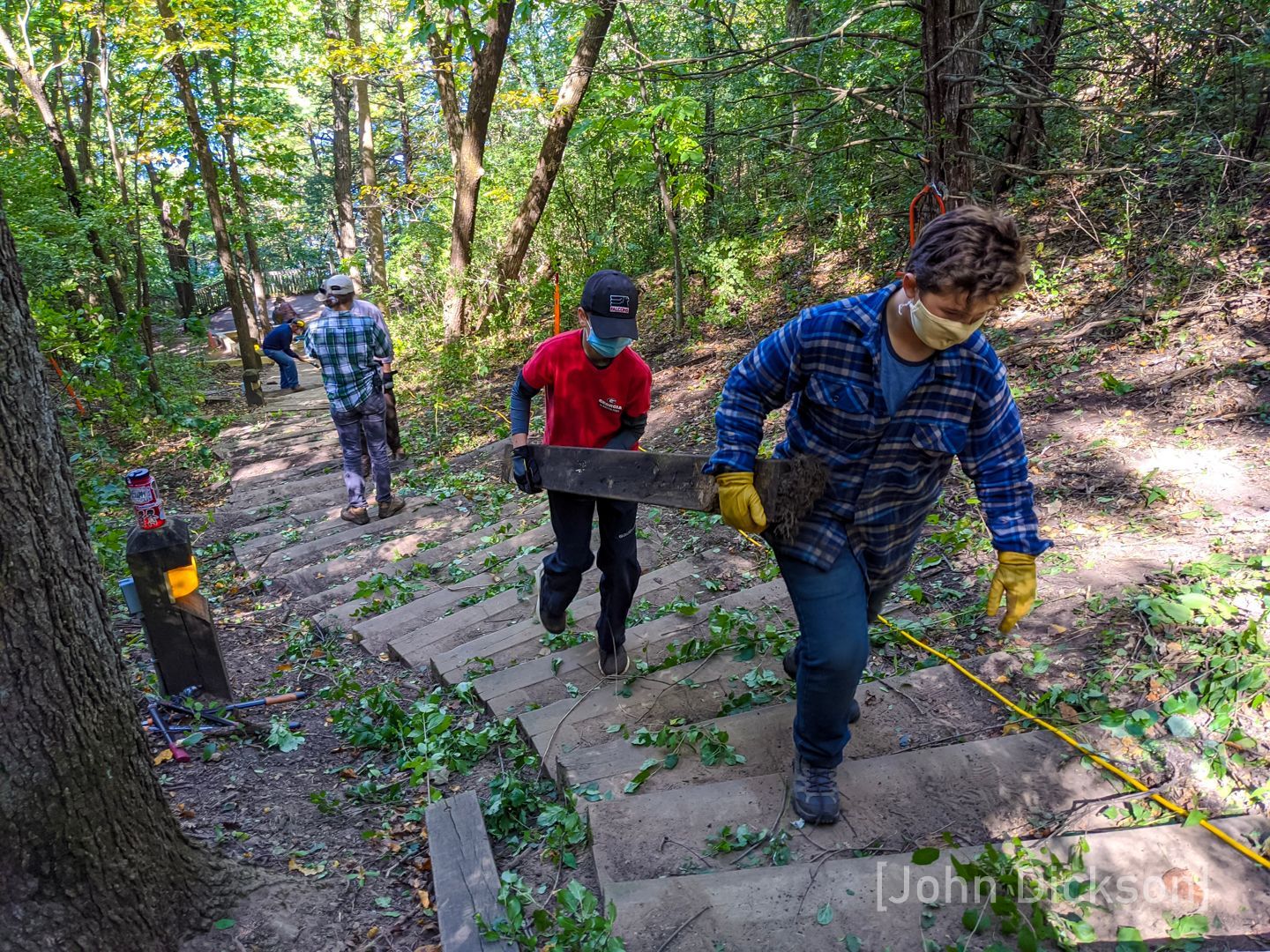
This article, "Adolescents Need Challenge," by Paula Lillard Preschlack appeared in The AMI Bulletin and describes the ways in which adolescents are capable of great growth when given the opportunity for meaningful work in service of their school, community, and family. At Forest Bluff School, our Secondary Level students are given many such opportunities. In addition to their rigorous academic pursuits and community outreach projects, students are tasked with planning, preparing for, and executing three major trips each year.


Our students built the amphitheater described by Mrs. Preschlack in this article for a YMCA camp in Minnesota. During this trip, the students slept outside in tents regardless of weather conditions and were responsible for preparing their own food around the campfire. Despite the hard physical labor and lack of creature comforts, our students return fresh-faced and jubilant and frequently describe these trips among their most formative experiences and cherished memories at Forest Bluff School.


Paula Lillard Preschlack has completed AMI certification at the Assistants to Infancy, Primary, and Elementary Levels and holds her M. Ed. from Loyola University in Maryland.


Read the full article in the AMI Bulletin: 
Adolescents Need Challenge 


More information about our Secondary Level program:
Academic Programs: Secondary Level

Community Testimonials (includes several letters describing our Secondary Level students, including one from the director of YMCA Camp St. Croix in Minnesota)


An elementary aged boy works with a Montessori grammar box to label parts of speech
By Margaret J. Kelley January 24, 2026
The pervasiveness of technology in our culture brings the support of technology in our everyday lives. Thanks to tools such as autocorrect, proofreading, ChatGPT, and other on-line sites, any piece of writing can be thoroughly checked and edited for grammar. They make corrections and suggestions, ensuring that documents are properly vetted before being shared in any format. These incredible and useful tools have had the secondary effect of a greater reliance on them for writing. Now, students and adults alike are inclined to depend on technology to fix their grammar rather than learning how to get it right in the first place. To a certain extent, it is helpful to have assistance in fine-tuning work. But issues arise when people simply stop learning how to utilize correct grammar. Thankfully, a Montessori education has a comprehensive and engaging curriculum for teaching the intricacies of grammar to students. It starts at age five, with concrete experiences with the function of words, and ends at age twelve, with elaborate sentence analysis. Then, in seventh and eighth grade, students have opportunities to rigorously apply the lessons they have learned in the more complicated projects they produce at this age.
Two Montessori students observe a sunflower growing in their class garden.
By Lina Bhatia December 24, 2025
A Forest Bluff School graduate reflects on her Montessori education and the skills and traits it helped her to develop as she looks to her future in the rapidly evolving workplace.